By CEDIA - Jun 1, 2026 • Blog, Installation Guides and FAQ's
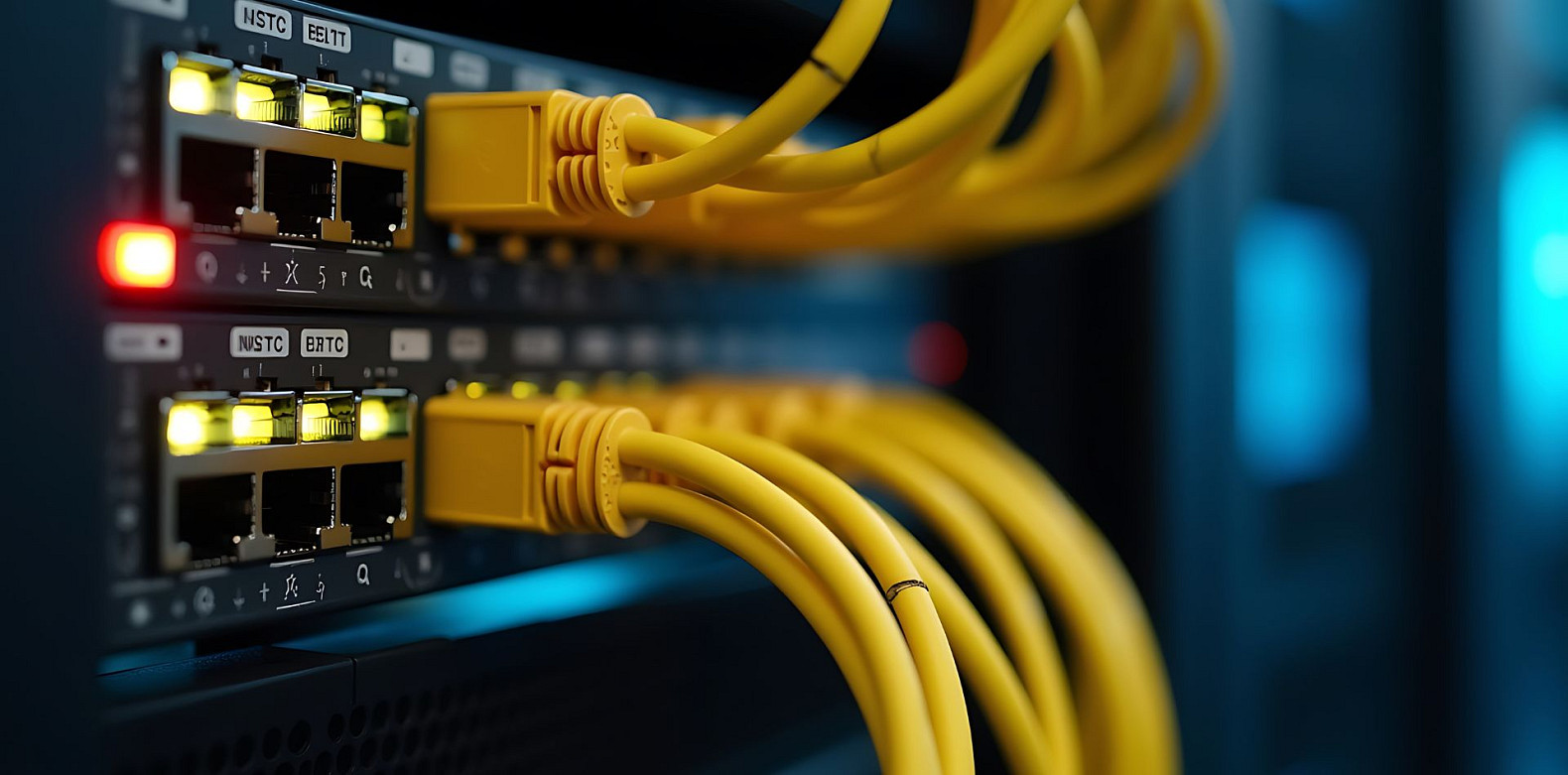
As modern speed and data demands grow, we’re seeing the rise of the Power-over-Ethernet smart home. Also known as PoE or PoE++, Power-over-Ethernet lighting and AV systems combine power and data in one single cable.
This offers unrivalled connectivity, ideal for smart lighting and sound, sensors, or even control devices in domestic and commercial environments. In tandem, PoE lighting saves energy and reduces complexity – supporting scalable smart home design.
Find out more about how Power-over-Ethernet works, plus the best practices for power budgeting and system planning.
Power-over-Ethernet transmits electricity and data through standard Ethernet cabling (Cat6/cAT6a). Originally used for IP cameras and access points, it has now evolved to support many smart home devices, including:
Depending on the device used, PoE follows one of three standards. PoE (802.3af) supports up to 1.4W, while PoE+ (802.3at) supports up to 30W, and PoE++ (802.3bt) up to 60-90W.
Homeowners benefit from simpler connectivity and faster power/data transmission. For integrators, installation is easier, while systems can also be scaled or upgraded faster with less troubleshooting.
Power-over-Ethernet smart home products offer myriad benefits for residents and installers.
Most commonly, Ethernet cables can speed up data and power transmission on devices such as:
PoE lighting takes a significant strain off integrators, lowering the number of callouts. With one cable for both power and control, there is less reliance on electricians. Where they are needed, electricians can find fixtures more easily than mains-wired alternatives.
This is ideal for retrofits, where high-voltage power can be disruptive. Rooms with multiple low-voltage endpoints are ideal for PoE, such as:
With one central portal, devices can be powered, monitored and rebooted remotely, saving callout time.
There are many key differences between PoE and traditional mains power, ranging from cabling to safety.
|
Feature |
PoE lighting and AV |
Mains power |
|
Cabling |
Single Ethernet run |
Separate power + control |
|
Central management |
Yes |
No |
|
Energy monitoring |
Built-in |
External |
|
Installation complexity |
Low |
High |
|
Relocation flexibility |
High |
Limited |
|
Retrofit suitability |
Excellent |
Limited |
|
Safety |
Low-voltage |
High-voltage |
When installing PoE lighting for home clients, integrators need to think about the overall design, as well as the power budget.
At the consultation stage, integrators should ask:
For technical updates and more information on these key design questions, CEDIA members can access our online learning portal.
For a safe PoE installation, installers should take the following steps:
The right power planning can prevent system dropouts and instability. It’s also an essential safety consideration, preventing overheating. For best results, integrators should segment all PoE devices on dedicated Virtual Local Area Networks (VLANs).
They should also label runs clearly for simpler maintenance, and use managed switches for monitoring and diagnostics.
Another selling point for integrators is sustainability, and the resulting cost benefits. With PoE systems, there is less reliance on copper and redundant electrical infrastructure. They also promote long-term efficiency, with scalable upgrades that don’t require structural changes.
Installations are faster and cheaper thanks to simplified wiring. Finally, the centralised power gives customers autonomy over their energy monitoring and load optimisation – resulting in lower bills.
Power-over-Ethernet smart home devices offer new revenue streams for integrators. Firstly, they enable new service models, including:
Secondly, these models can also be part of aftercare and maintenance contracts, offering long-term value. Take a look at them in action with our case studies here.
To stay ahead of emerging PoE standards and best practices for smart homes, join CEDIA today. Improve your customer service with up-to-date industry knowledge, all available in our online resources.
Tue, Oct 13, 2026
Do’s and Don’ts from a Residential Designer
Fri, Oct 9, 2026
How CEDIA Certification Can Change Your Business
Tue, Oct 6, 2026
How Light, Sound, and Scent Shape the Experience of Home
Thu, Oct 1, 2026
Designing a Home Around Sound - Sponsored