
Launch your career in smart home technology
Earn while you learn with the Smart Home Technician Apprenticeship. Gain hands-on experience, earn an industry-recognised qualification, and build a future in one of the UK's fastest-growing technology sectors.
Apply for Apprenticeship Hire an Apprentice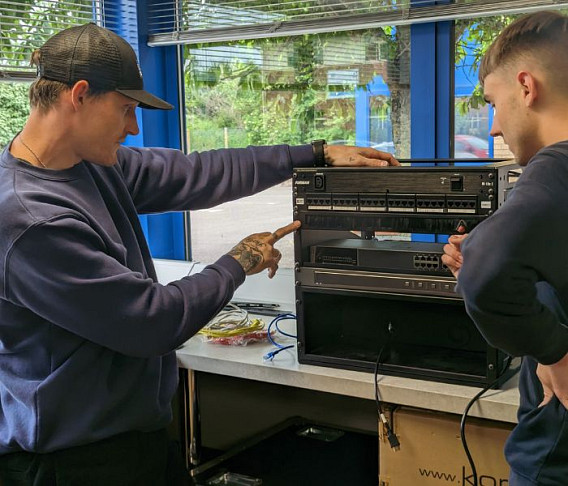
Today's Smart Home Technician installs, configures, and maintains integrated technology systems that make homes smarter, safer, and more connected. Technicians work alongside experienced professionals on projects ranging from family homes to luxury residences, yachts, and large-scale residential developments.
There are no rigid entry requirements for the Smart Home Technician Apprenticeship. You need to be over 16, not in full-time education, and eligible to work in the UK. There is no upper age limit — career changers from electrical, IT, AV and general trades backgrounds are actively welcomed.
Individual employers may set their own preferences, often around GCSE English and maths, but practical aptitude and genuine interest in the technology carry significant weight. If you enjoy problem solving, working with your hands and working directly with clients, this is a realistic route in.
As an apprentice you will earn at least the National Minimum Wage for apprentices from day one, and many employers in this industry choose to pay above it. You will also receive holiday pay, pension contributions and full employee benefits while you train.
On completion, qualified smart home technicians move onto a full technician salary, with further progression into lead installer, systems designer and project management roles. Indicative salary ranges for the role are published on the National Careers Service Smart Home Installer profile.
Five steps from application to qualification
Identify apprenticeship vacancies with nearby employers and complete your application.
Interview with a smart home integration company and secure your apprenticeship offer.
Begin your blended training programme, combining online and in-person workshops led by your training provider with on-the-job learning under your employer.
Gain hands-on experience on real-world projects while studying for your qualification and earning your own wage.
Complete the Level 3 qualification with your End Point Assessment and progress your career within smart home technology.
Apprenticeships help businesses develop skilled professionals tailored to their needs while reducing recruitment costs and improving employee retention.
For employers looking to open an apprenticeship vacancy, we recommend contacting Career Crafters, who are a training provider currently delivering the Level 3 Smart Home Technician standard. Career Crafters offers flexible learning options and provides apprenticeship training through:

Whether you're starting your career or investing in future talent, the Smart Home Technician Apprenticeship provides the pathway.
Apply NowIf you are still weighing up whether smart home technology is the right career, start with our guide to becoming a smart home installer, which covers what the job involves day to day, what you can earn, and the routes into the industry.
How to become a Smart Home Installer GuideVacancies are listed by employers through the training provider and on the government's Find an Apprenticeship service. Because the industry is made up largely of smaller specialist companies, it is also worth approaching CEDIA member integrators in your area directly.
No. The apprenticeship is designed to take you from no prior experience to a Level 3 qualification. Existing experience in electrical, IT or AV work is useful but is not a requirement.
At least 20% of your apprenticeship will involve off-the-job, formal training. This could be online, in-person, or a combination of both, and will be delivered by your training provider. In addition, you'll also receive on-the-job direct training with your employer which may involve job shadowing or in-house training sessions.
There is no upper age limit. Anyone over 16 who is not in full-time education can apply for an apprenticeship.
Employers must pay at least the National Minimum Wage for apprentices, but often employers will choose to pay more, depending on the job role.
The smart home technology industry is fast-growing, and there is always a need to keep up with the newest technologies. By continuing your role as a smart home technician, there will be many opportunities for professional development, with employers often sending technicians to the latest manufacturer product trainings and other industry-specific education, such as CEDIA courses.
Most apprentices continue with their employer as a qualified technician. From there, CEDIA certifications (CIT, IST, RNS, ESC-D) support progression into specialist and senior roles across the industry.
Typically 18 - 24 months, though this will depend on the training provider. Career Crafters deliver this standard as a two-year apprenticeship.
The apprenticeship is fully funded by the government under the UK apprenticeship levy.
Yes, you will be required to pay the National Minimum Wage for apprentices. You can also choose to pay more if you wish, which many employers opt to do.
The standard can be viewed on the Skills England page for Level 3 Smart Home Technician.