
The future of the smart home technology industry depends on a skilled, qualified workforce. As demand for connected technology continues to grow, so does the need for professionals who can design, install, integrate, and support increasingly sophisticated home technology systems. To help meet this challenge, CEDIA has achieved a significant milestone in advancing workforce development across the industry.
On Smart Home Day, November 3, 2026, the U.S. Department of Labor approved CEDIA's National Guidelines for Apprenticeship Standards for the occupation of Technology Integrator. This approval establishes a nationally recognized framework for structured, hands-on training and technical education, creating a clearer pathway for individuals entering the profession and helping integration businesses develop the skilled talent they need to grow.
FAQs
One of the program's most significant benefits is its approved 2:1 apprentice-to-journeyworker ratio, allowing participating businesses to train two apprentices under the supervision of one qualified, experienced technician. This flexibility gives employers an opportunity to expand their training capacity using their existing workforce, helping address one of the industry's most pressing challenges: attracting and developing skilled professionals.
FAQs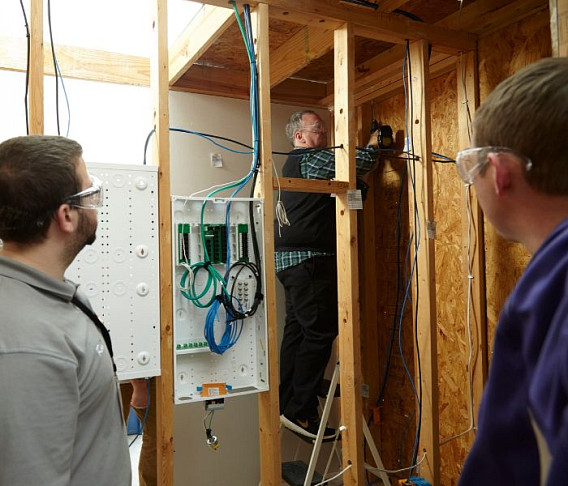
The guidelines combine practical, on-the-job experience with technical instruction, ensuring apprentices develop the knowledge and skills needed for a successful career in smart home technology integration. The approved hybrid framework includes 4,000–6,000 hours of on-the-job learning, 83 competencies, and 630 hours of related technical instruction. Progression combines workplace experience with demonstrated skills.
As CEDIA moves into the next phase of implementation, the association will work to help interested businesses understand the requirements and steps involved in establishing locally registered apprenticeship programs.
Hours of on-the-job learning
Hours of related technical instruction
Competencies
On Smart Home Day, November 3, 2026, the U.S. Department of Labor’s Office of Apprenticeship approved CEDIA’s National Guidelines for Apprenticeship Standards for the occupation of Technology Integrator. The guidelines provide a nationally approved framework for developing locally registered apprenticeship programs. CEDIA developed this framework to help integration businesses build a skilled workforce and create clearer career pathways.
For the first time in the United States, the Department of Labor has acknowledged “Technology Integrator” as a trade worthy of recognition as an established career path, equal to that of other construction and home-based trades.
The approval establishes CEDIA’s structured training framework to help employers develop talent and strengthen professional skills.
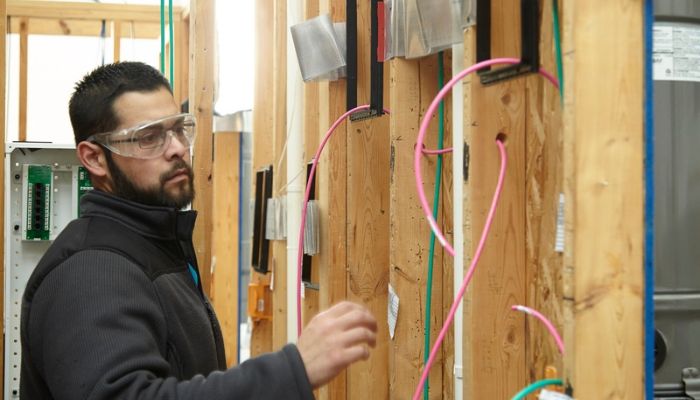
A technology integrator installs, unifies, configures, and maintains systems that make homes more connected and functional. The work can include networking, lighting, audio and video, security, automation, and customer education.
A registered apprenticeship combines paid, supervised on-the-job learning with related technical instruction. CEDIA’s guidelines outline a hybrid approach in which apprentices progress through practical experience and demonstrated competencies.
The guidelines provide a foundation for participating businesses to establish structured apprenticeship opportunities. Employers will need to complete the appropriate federal or state registration process and provide qualified two-to-one or one-to-one supervision, suitable training equipment, hands-on work opportunities, and required documentation.
CEDIA secured a rare approval for a ratio of two apprentices to one qualified journeyworker (experienced supervising technician) on the jobsite; typical approval is one-to-one. This allows participating integration businesses to train more emerging professionals using their existing experienced workforce than most industries connected to the home. Combined with structured hands-on learning and technical education, the framework can help members expand training capacity and develop a more sustainable talent pipeline.
The framework supports a pathway to learn while employed, gaining hands-on experience, and developing technical competencies. Availability, application steps, and eligibility will depend on participating programs and their applicable requirements.
Schools can incorporate classroom training, content, and labs into their curriculum, and on-the-job learning can be completed after graduation at an approved integrator company.
Training covers integrated system installation; wiring and cable routing; networking and hardware; audio, video and lighting; programming and automation; cybersecurity and privacy risks (default passwords, IoT vulnerabilities, and exposure risks); troubleshooting and identifying misconfigurations; customer communications and education; and AI and smart automation systems. The curriculum combines practical workplace experience with related technical instruction. CEDIA will provide detailed training guidance to participating employers through the implementation process.
The approved hybrid framework includes 4,000–6,000 hours of on-the-job learning, 83 competencies, and 630 hours of related technical instruction. Progression combines workplace experience with demonstrated skills. Participating employers will receive the detailed requirements and guidance needed to implement the program.
No. Apprenticeship is a structured employment and training pathway; CEDIA certification is a separate professional credential. However, the related instruction includes successfully completing CEDIA’s Cabling Infrastructure Technician (CIT) and Integrated Systems Technician (IST) examinations.
No. The Department of Labor approved CEDIA’s National Guidelines for Apprenticeship Standards, which serve as a framework for locally registered programs. Participating programs must still be registered through the appropriate federal Office of Apprenticeship or State Apprenticeship Agency. CEDIA developed and owns the national guidelines; its precise operational sponsorship and support arrangements will be confirmed based on individual employers once programs are registered.
CEDIA is developing guidance for interested integration businesses on local registration, qualified supervision, hands-on training facilities and equipment, documenting on-the-job learning, and applicable reporting requirements. Companies should prepare to provide opportunities for apprentices to complete required work and demonstrate their skills.