
By CEDIA - May 7, 2026 • Blog
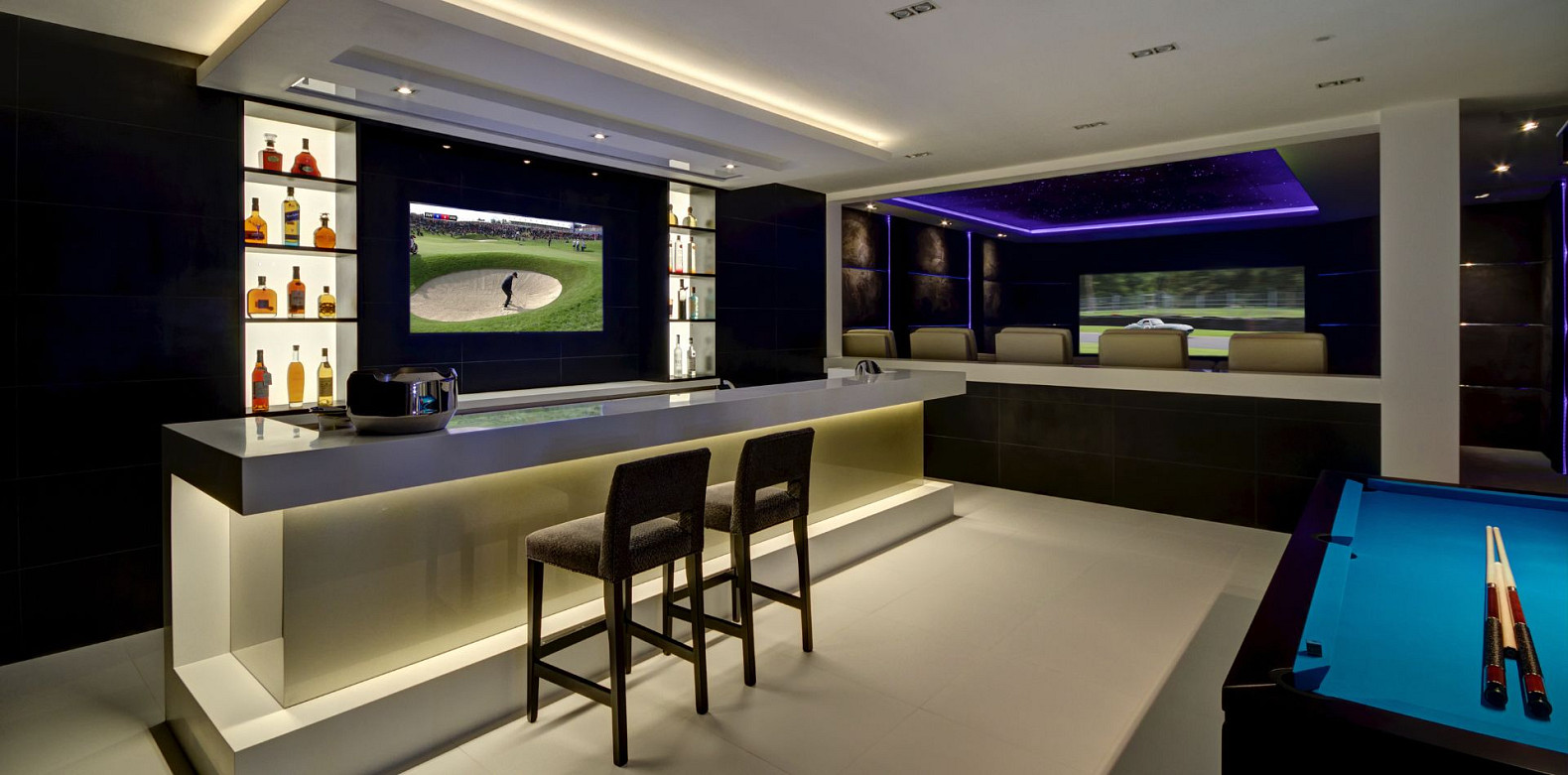
Smart gaming rooms can help homeowners take their gaming and esports experiences to another level.
When professionally designed, a gaming room can offer a comfortable area to play. By integrating smart lighting, sound, and automation, it can offer an interactive experience that’s impossible to achieve with a standard console and monitor setup alone.
In this article, we’ll outline luxury gaming room design, including the different types of smart technology it involves.
A luxury gaming room elevates the home gaming experience. While playing video games with a console and a monitor in a living space can still be entertaining, a luxury gaming room can enhance enjoyment by incorporating custom seating (like vibrating chairs), immersive audio visual (AV) technology, and high-speed connectivity. Play spaces can also include a range of controllers, like steering wheels, for more immersive experiences.
Plus, a luxury gaming space can effortlessly incorporate wider smart home features, like climate control and lighting, to improve the overall atmosphere.
A Smart Home Professional can configure the space to ensure smooth integration between lighting, sound, gaming technology, and smart furniture. For example, you might feel your chair respond when you lose a life in a game.
Luxury gaming room design balances aesthetics with functionality. A professional integrator will consider elements like ergonomics (i.e. how you sit and play), lighting levels, and display positioning. They’ll think about how a space looks and if it’s practical for peak gaming.
It’s important for the placement of furniture to match with gaming needs. For example, an ergonomic chair that positions you at eye level with the monitor can enhance comfort. Maintaining proper posture can also improve reaction times, which is crucial for serious gamers and esports players.
Professional installers can also optimise power and cabling for excellent connectivity and aesthetics. CEDIA-certified integrators can advise on the best connections and how to hide unsightly cables.
To create a high-performance gaming room, it’s worth considering the following elements:
Multi-screen setups create a wider field of view and extend a gamer’s peripheral vision.
They can enhance racing games as having several monitors can increase a player’s immersion and spatial awareness.
With flight simulators, multiple screens can mimic the panoramic views of a real cockpit.
Multi-screen setups are also popular with those who play first-person shooters, as the wider view helps gamers spot enemies sooner and react faster.
High refresh rate displays can help you gain a competitive advantage against other gamers online.
Standard monitors have a refresh rate of around 60 Hertz (Hz), meaning they can show 60 images per second. High-performance monitors have a refresh rate of 120Hz, 144Hz, 240Hz, and sometimes more.
The higher the refresh rate, the smoother the images will appear. With high refresh rates, there will also be less output lag meaning an image will appear on the screen faster, helping boost reaction times.
To make the most out of high refresh rate displays, you will need compatible devices. If you’re a PC gamer, your computer will need to have a high enough GPU and CPU to produce the appropriate frames per second (FPS). It’s therefore important to consider your gaming setup holistically, as monitors alone won’t always speed up images.
Network redundancy is the process of designing a network that has backup systems to minimise downtime. This reduces the risk of disruption during a gaming session. For esports players and other online competitive gamers, it’s particularly important to maintain a fast connection. Having reliable infrastructure keeps video gamers online and connected to their game, opponents, and streaming viewers.
While you can buy and use some smart gaming components, such as light bars and universal remotes, independently, you’ll need a professional integrator to incorporate them into a reliable system with backup connectivity.
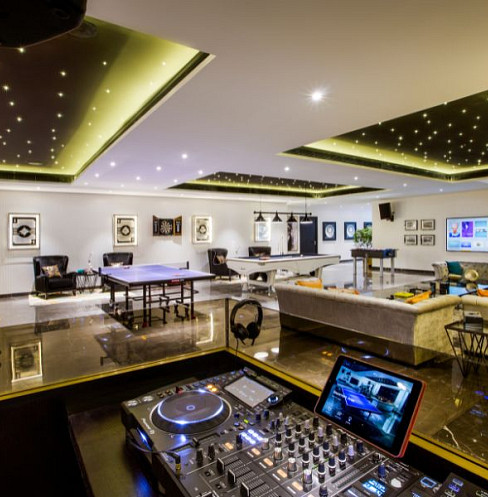
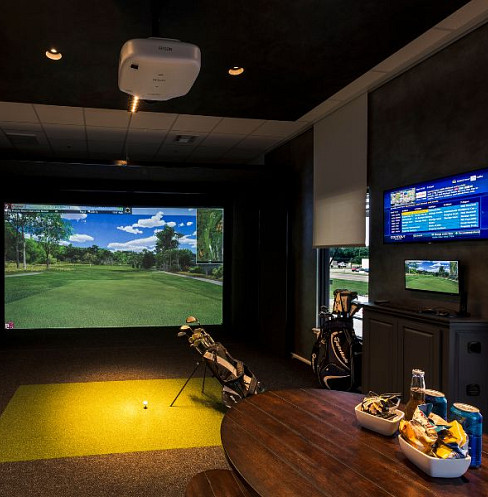
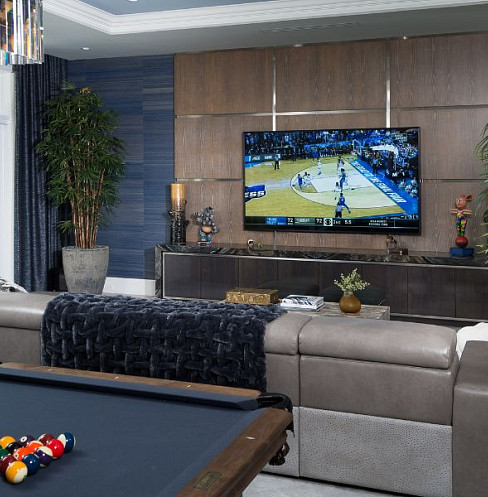
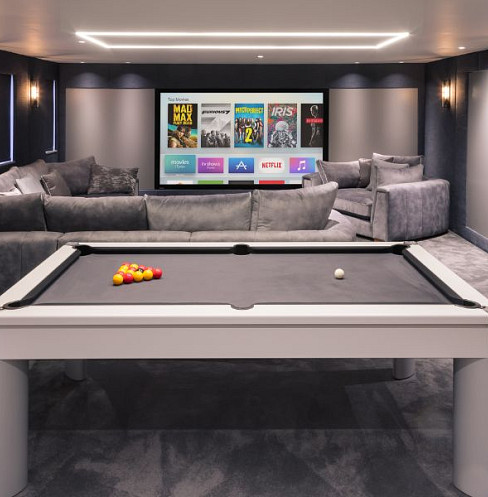
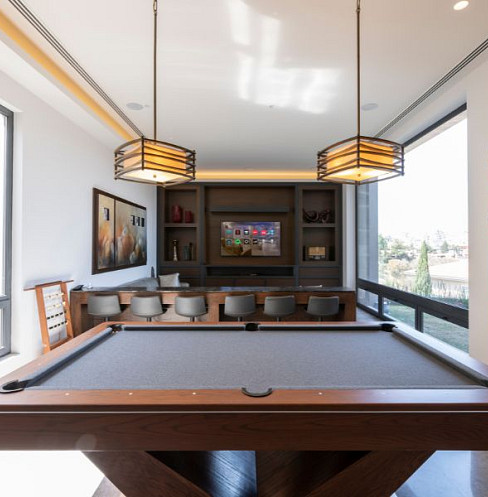
Smart tech can further the feeling of immersion. Some popular smart gaming room features include:
Automated lighting can enable RGB (Red, Green, Blue) effects. This lighting alteration adds a sensory element to gameplay.
You might wish to coordinate lights across gaming equipment, like keyboards, as well as ambient room lighting. The smart lighting can be static and emulate a game’s mood, such as red lighting to increase the feeling of tension. Alternatively, it can be changeable. For example, lights could pulsate to mimic a character’s breathing rate.
Climate control can help keep your smart home gaming space at a comfortable temperature. You may want air conditioning to prevent devices from overheating. It can also help you stay cool during intense gaming sessions.
Integrated audio brings together a gaming room’s speakers, soundbars, and controllers into one cohesive system. The unified approach makes adjusting the volume of video games easier and can help create more immersive audio experiences.
Professional programming can help tie these elements and many more together.
Effective AV systems are essential in luxury gaming rooms. You can maximise video game enjoyment with displays that can handle high definition graphics and audio systems that enhance sound effects and music .
A multi-channel surround sound setup can help immerse gamers in the virtual world they’re playing in. High-end monitors and projectors can also bring the visuals to life. By integrating AV with a smart home gaming dashboard, it’s simple to control volume, brightness, and more.
Beyond tech, you may also want to consider acoustic treatments to manage sound in the room. Elements like foam panels, bass traps, and diffusers can improve sound quality and clarity. While acoustic treatments won’t stop the noise leaving the room (you’ll need soundproofing for that), they will improve what you hear within it. For streamers, it can also create a better environment for recording.
Within a luxury play space, you can optimise lighting to create the ideal ambience for smart home gaming.
Smart lighting scenes using the RGB colour scheme can make lights automatically match the intensity of the game and specific moments. For example, if a character is facing imminent danger, wall panels may flash red as a warning. Alternatively, static green lighting can create a calming atmosphere for a relaxing gaming session.
Circadian-friendly options can mimic natural daylight and make it easier to rest after gaming. As exposure to blue light can disrupt sleep, blue-free lighting is a desirable feature for evening and nighttime gaming.
Different brightness levels can also impact performance. High brightness white lighting can boost concentration.
Integrating smart technologies and customising them to suit gaming can be complex. Although you can make some small adaptations yourself, you’ll need to use a professional integrator to create a luxury gaming room. CEDIA-certified installers can ensure cross-device compatibility and future-proof the space.
Tue, Oct 13, 2026
Renovations: Smart Home Decisions to Make Early
Sun, Oct 11, 2026
Smart home systems that actually add value when you sell your house
Mon, Oct 5, 2026
What to Ask a Smart Home Installer Before They Start

Wed, Sep 30, 2026
What does a CEDIA-certified Smart Home Professional actually do?