
By CEDIA - Fri, Jan 16, 2026 - Blog
Amid a full suite of lighting, sound and visual smart home technology, structured cabling remains the backbone. Today, integrators have three main options: Cat6A, Cat7 and fibre. Each offers its own advantages in terms of supporting multi-gigabit networking, Power over Ethernet (PoE) technology, and changing AV standards.
If you’re not sure which is right for your client, our Cat6A vs Cat7 vs fibre guide will help. Here, you’ll find key information on bandwidth, shielding, distance limitations and installation factors.
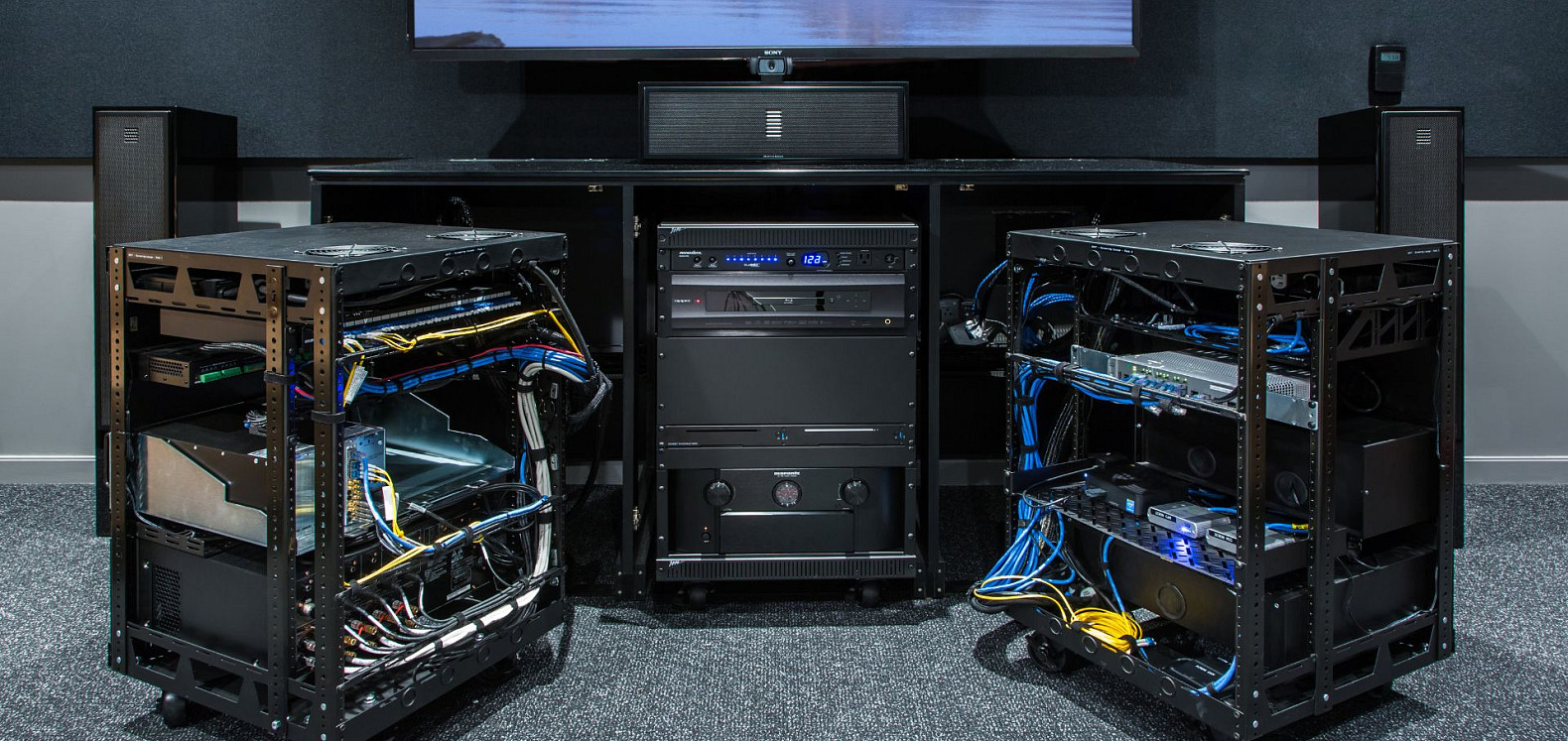
While wireless technology is synonymous with convenience, structured cabling offers reliability. Performance is guaranteed with its capabilities to transmit large amounts of data in seconds. This is essential for whole-home automation setups, making use of tech such as:
Robust cabling systems also promote scalability, particularly if homeowners are using AI edge devices to run several IoT applications at once.
As an installer, you can also assure your customers of the long-term value of good cabling. Future-proofing ensures you balance speed, shielding and compatibility to avoid costly retrofits.
The perfect all-rounder, the current standard Cat6A suits most standard smart homes. Its bandwidth of up to 10 Gbps, stretching a distance of 100m, is appropriate for typical residential needs. This kind of cabling will support high-speed networking, multi-gigabit switches and PoE devices, with a frequency of 500 MHz.
As the standard, Cat6A is generally very easy to come by, without breaking the bank. It is versatile and compatible with legacy hardware including Cat6 and Cat5e. Thanks to its universal design, it also offers easier termination, together with a more flexible bend radius than Ca7.
Cat6A has limited scope for future-proofing, as it cannot exceed 10 Gbps data transfer speeds. It is also bulkier than its Cat6 predecessor, making it harder to manage in tight conduits.
Like Cat6A, Cat7 has a bandwidth of 10 Gbps. However, at short distances, it’s capable of 40 Gbps. With four twisted copper wire pairs, Cat7 offers individual pair shielding (S/FTP), which increases its frequency to 600-1,000 MHz.
Thanks to this shielding, Cat7 is ideal for environments with high levels of electro-magnetic interference (EMI). Likewise, it works well for areas where ultra-clean signal is essential, such as racks in power circuits.
The S/FTP shielding gives Cat7 superior noise immunity, as well as protection against unwanted signal transfers between wire pairs (crosstalk). In dense AV or automation networks, it provides a future-proof solution with speed and clarity.
Cat7 lacks the standardisation of Cat6A, using GG45 or TERA connectors rather than the universal RJ45. This may cause compatibility issues, along with stiffer cables that are harder to terminate.
While it can achieve higher speeds than Cat6A in some settings, this is limited – but it is still higher in cost.
For speed, clarity and scalability, fibre is the ideal choice. Its bandwidth is virtually unlimited (upwards of 800 Gbps), ideal for high-demand operations. Bigger projects such as backbone runs, large estates and multi-dwelling developments are well-suited to fibre, particularly as data demands evolve.
Similar to Cat7, fibre is highly immune to electrical interference. Transmission distances are considerably larger, averaging around 200km. They are also slim and lightweight, offering full flexibility for scaling.
With these advantages come higher termination costs. Likewise, installation will be more expensive due to the expertise required. Finally, your customer may have to pay more if you need to use conversion equipment for standard Ethernet devices.
When choosing structured cabling, always consider your clients’ specific needs. Simpler residential setups will benefit from combined Cat6As to connect devices. In areas of high EMI, Cat7 is best, while fibre is ideal for backbone links.
Whichever setup you’re using, always plan your infrastructure with open conduits. Label your cabling for easier upgrades and future-proofing. Above all, remember safety is paramount – always test and certify your installations not just for performance, but for secure PoEs.
Thu, Mar 26, 2026
CEDIA Smart Home Awards: The Business of Winning
Thu, Mar 26, 2026
CEDIA Launches Integrator Advantage Program for Australian Members
Tue, Mar 17, 2026
CEDIA Named Knowledge Partner for Smart Home Expo India
Thu, Mar 12, 2026
CEDIA Smart Home Awards 2026: Expert Advice for Entrants
Mon, Mar 9, 2026
CEDIA Smart Home Awards: A Manufacturer’s Perspective
Wed, Mar 4, 2026
CEDIA Smart Home Awards: Collaboration in Action