By CEDIA - May 6, 2026 • Blog
What was your journey into the smart home industry?
I came into the smart home industry with a background in computer science. I spent a couple of years working in IT consultancy and IT project management and then moved into an IT management position, which, all together, added up to about 20 years in the corporate world.
Eventually, I decided to turn my hobby and passion, which is home cinema, into my profession. I stepped out of my corporate career and started to build up Die Zwei – Heimkino with my business partner, Stefan Becker.
Tell us a bit more about Die Zwei – Heimkino.
We are a very new integration company, having only started in 2020. We are based in Hamburg in Germany, but we operate internationally.
We pride ourselves on doing things a bit differently from traditional AV integrators, largely due to my background in IT. We use a lot of technologies from the IT world, such as remote monitoring and AV-over-IP solutions, as well as the structured processes that you find in corporate IT environments. This approach influences everything from how we manage projects to how we interact with clients.
Regarding the team and our setup, we want to keep the internal team as just Stefan and myself. As we operate internationally, we contract construction companies that are local to the project, but we do everything else, and we do 90-95% of it from our workshop. Rather than basing ourselves at the projects for several days, weeks, or months on end, we get everything assembled, programmed, and tested at the workshop and ship it to site when ready. It’s then pretty much a case of plug and play. This means that we usually only head to site three times per project for just a few days, which results in a more streamlined process and the option to work on projects anywhere in the world.
Do you have a showroom at your office?
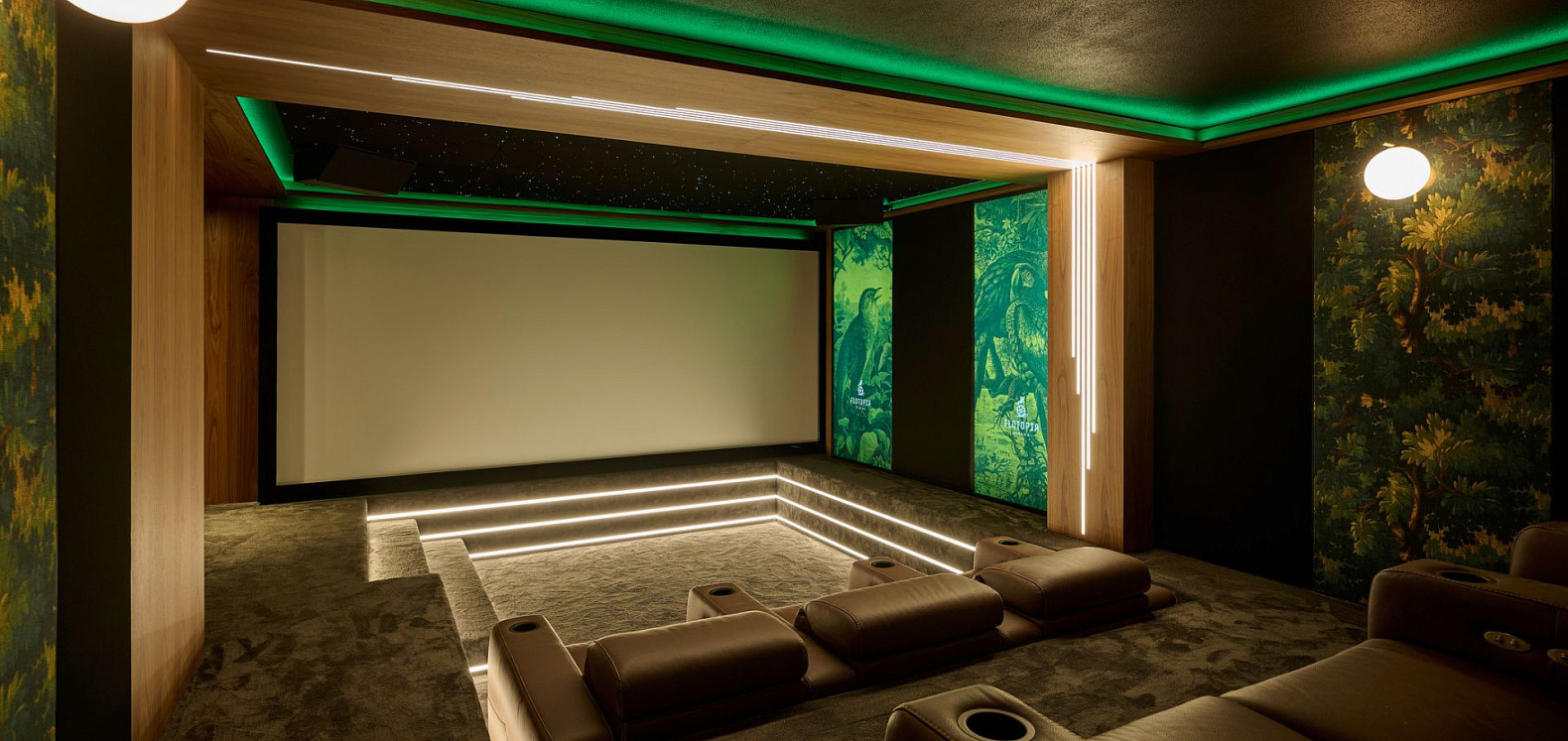
We have a showroom that I built as an extension to my private home. We invite our clients to visit this space to experience our home cinema solutions first-hand. The showroom is a 40 square meter room with a fantastic cinema set up and a small bar area.
We specialize in high channel installations, so we installed a 13.16.6 set up that features our own speaker brand, beckersounds, including sixteen 21" subwoofers in a Double Bass Array (DBA) Waveforming set up. DBA was invented in Germany, so we have a lot of experience in this technology, having used it for over 10 years. The room also features a Christie projector, a curved 184" acoustically transparent screen, a madVR video processor that does the geometrical correction for the curve of the screen, and seven Powersoft amplifiers that provides us with 56,000 watts of amplification.
That’s an interesting choice of equipment as you have opted for some pro AV brands. Is this something that you often do?
Yes, Christie projectors are our first choice as we have special expertise in high-lumen projection, which is something that consumer projectors cannot deliver on larger screens. With regards to amplification for our beckersounds speakers, we use a pro AV brand called Powersoft, as these amplifiers can deliver a lot of power over an extended period of time.
How do you find your customers?
Much of our customer base comes from word-of-mouth recommendations and referrals, which I believe is a testament to the quality of our work and the relationships that we have built. Networking at industry events and maintaining a visible presence in the smart home community also helps us connect with new clients.
I'm also involved with some home cinema Internet forums, and interestingly enough, this has been a source of new clients and projects for us. Some people say that forums can be a waste of time, but we've managed to build a good reputation online, and clients have reached out to us from there.
Why did you become a CEDIA member?
We joined CEDIA right from the beginning of the company in 2020. The main driver in doing so was that we wanted to win a CEDIA Smart Home Award. We saw the awards as an opportunity to have our work recognized by industry experts and to benchmark ourselves against the best in the business. We wanted to enter because it motivates us to maintain high standards and push the boundaries of what we can achieve for our clients.
So, you joined in 2020, but when did you first enter the CEDIA Smart Home Awards?
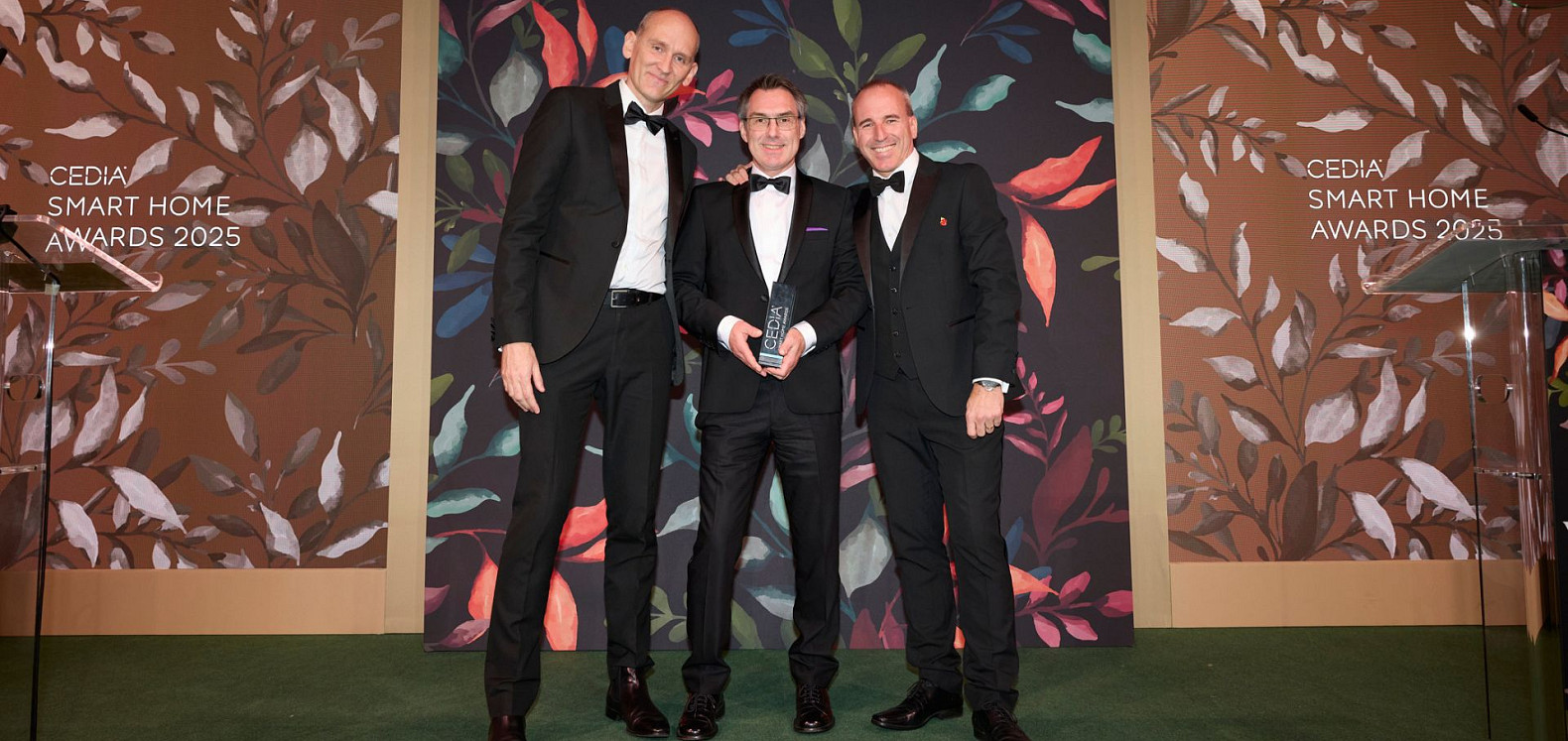
We entered the very next year in 2021 with our first project, and it got nominated as a finalist, which was very exciting and motivating. We entered another project in 2024, and again, were listed as a finalist. But in 2025, we entered a fantastic home cinema project in Austria and were awarded Best Home Cinema Level III. I'm really proud of this award. We are a very small company and have only been in business for five years, so to have been recognized each time, and for us to now have won an award, is a great achievement for us. And I believe that we are the only integrator in Germany to win a CEDIA Smart Home Award for a client project. We are now planning for next year and hope to be able to enter our showroom into the awards program.
What other CEDIA member benefits do you utilize?
I am a volunteer for the RP23 working group. I thoroughly enjoy being a part of this group as the topic is of great interest to me, plus it provides me with the opportunity to network with a fantastic group of knowledgeable professionals and engage in interesting discussions.
I have also completed the Design Build Program to allow me to present CPD’s to architects and interior designers. We believe that the room design is of equal importance to the technical design for a great movie experience, so working with interior designers rather than against them is something that is key for me.
We go to ISE every year and enjoy networking with CEDIA and the industry at this show. I find it invaluable to stay up to date with the latest trends and technologies in the industry.
What technology excites you the most?
One of the technologies that excites me most is video walls. Our background has always been in high-brightness projection, and we appreciate the vibrant images and impressive brightness levels that come with high nit displays, particularly when it comes to HDR and tone mapping. However, projection systems involve a compromise – as you increase brightness, you also raise the black floor, which affects the overall quality.
Video walls deliver flawless sharpness, true blacks, and extremely high brightness. That said, they do present some installation challenges, especially when it comes to audio. Since you can't position speakers directly behind the screen as you would with an acoustically transparent projection surface, we have to arrange speakers around the screen instead. This can be tricky, especially when it comes to achieving DBA/Waveforming placement, which isn't straightforward with LED walls. Nevertheless, I'm excited to find a project where we it would make sense to have an LED wall installed.
Tue, Oct 13, 2026
Do’s and Don’ts from a Residential Designer
Fri, Oct 9, 2026
How CEDIA Certification Can Change Your Business
Tue, Oct 6, 2026
How Light, Sound, and Scent Shape the Experience of Home
Thu, Oct 1, 2026
Designing a Home Around Sound - Sponsored