
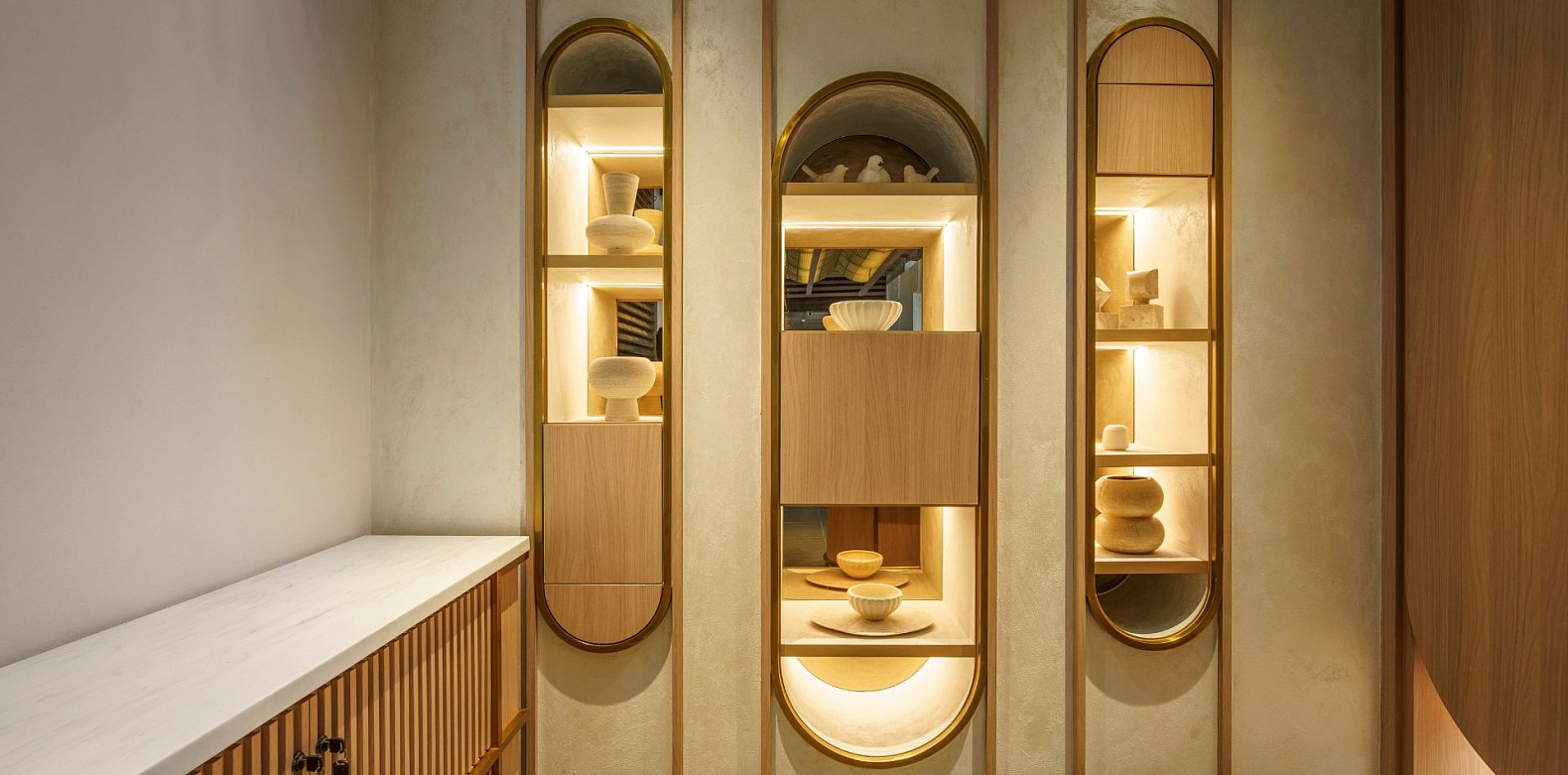
As an interior designer, I spend a great deal of time thinking about how people live in their homes. Not how a home photographs, but how it functions on an ordinary Tuesday morning, during a busy workday, or at the end of a long evening.
The best homes support the rhythms of daily life. They simplify daily routines and remove unnecessary obstacles from everyday living. While beautiful finishes and furnishings certainly contribute to a home's appeal, true luxury often comes from something less visible. It comes from how a space makes us feel.
For years, conversations about wellness in the home focused primarily on dedicated spaces such as home gyms, yoga rooms, and spa-inspired bathrooms. While those features remain important, I believe wellness design has evolved into something much broader. Today, wellness is integrated throughout the home and influences the way we experience our surroundings every day.
One of the challenges with wellness design is that most homeowners never ask for it. In fact, they rarely use the word “wellness” at all.
I have never had a client call me and say they need lighting that supports their circadian rhythm. They tell us they aren't sleeping well because the morning sun pours into their bedroom too early.
They don't ask for acoustic treatments. They tell us they are tired of hearing doors slam throughout the house or that their open floor plan feels noisy and chaotic.
They don't request a distributed audio system. They tell us they love music and wish they could enjoy it throughout the home without blasting the volume or carrying speakers from room to room.
As designers and technology professionals, part of our role is learning to listen beyond the request itself. Often homeowners are describing a challenge, an annoyance, or something that simply isn't working well in their daily lives. Our job is to uncover the underlying issue and then identify solutions that improve how the home functions and feels.
The conversation is rarely about technology. More often, it is about comfort, convenience, rest, focus, connection, and enjoyment. Light, sound, and scent may not always be the first topics discussed during the design process, yet they have an extraordinary impact on comfort, mood, productivity, and relaxation. When thoughtfully integrated, they help create homes that feel as good as they look.
Few elements affect our daily experience more than lighting. Light influences how we work, come together to prepare meals, entertain, relax, and transition from one part of the day to another. Yet many homes still rely on a basic approach to lighting, with little consideration given to how a room may serve multiple purposes throughout the day.
As designers, we have long understood the importance of layered lighting. Ambient lighting provides overall illumination. Task lighting supports specific activities. Accent lighting highlights architectural details, artwork, and decorative features. Together, these layers create depth, functionality, and visual interest.
Today's technology allows us to take that concept even further. You don’t want the same level of light when you are cooking as you do when you move to the dining part of the day. Lighting systems can now adapt to changing activities and lifestyles. Bright, focused light can support concentration and productivity during the day. Softer, warmer illumination can create a more relaxed atmosphere in the evening. Thoughtfully programmed lighting scenes allow homeowners to transition seamlessly from one activity to another without constantly adjusting switches and controls.
The earlier lighting decisions are discussed between the designer, architect, electrical contractor, and integrator, the more successful the outcome tends to be. Fixture selection, control systems, furniture placement, artwork illumination, window treatments, and shading solutions all influence the final result, which is a more nurturing environment to be in.
Remember that sunny morning wakeup call? A homeowner may not ask for tunable lighting or automated shades. Understanding the problem allows the design team to recommend solutions the homeowner may never have known existed. Good lighting is not simply about visibility. It is about creating environments that support the way people live. Sometimes it is about controlling natural light as much as artificial light.
While lighting often receives significant attention during the design process, sound is frequently overlooked, but sound has a profound influence on how a space feels. Many homeowners are surprised to discover how much unwanted noise affects their comfort level. Mechanical systems, hard surfaces, open floor plans, and poor acoustic control can create environments that feel distracting, stressful, or exhausting.
At the same time, intentional sound can enrich daily life. Music during meal preparation. Background audio while entertaining. Nature sounds in a primary suite. Curated playlists that support focus, relaxation, or family gatherings. These experiences contribute to the atmosphere of a home in meaningful ways. The conversation around sound should include both acoustic control and audio enjoyment.
Reducing unwanted noise is just as important as introducing desired sound. Soft furnishings, area rugs, wall treatments, drapery, upholstered furniture, and thoughtful space planning all play a role in managing acoustics.
Acoustics are often shaped by choices that designers make every day. When those decisions are coordinated with an integrator's recommendations, homeowners benefit from both improved performance and a more cohesive design.
A homeowner may describe a room as noisy, busy, or uncomfortable without realizing poor sound management is contributing to the problem. Others may simply wish they could listen to music throughout the house without sacrificing conversation when family and friends gather. These are the moments where design and technology can work together to create meaningful improvements to everyday living.
Scent is perhaps the most overlooked component of residential design, yet it may be one of the most powerful.
We often associate scent with memory. Certain fragrances can instantly transport us to a favorite destination, remind us of a meaningful experience, or create a sense of comfort and familiarity.
Luxury hospitality environments have long understood the role scent plays in shaping a guest's perception of a space. Increasingly, homeowners are seeking ways to create similar experiences within their own homes. Whole-home scent systems and integrated fragrance solutions are making it easier than ever to establish a consistent sensory experience. Some homeowners prefer fresh, clean fragrances. Others gravitate toward warm, comforting scents or subtle botanical notes.
There is no universal solution because scent is deeply personal. The goal is not to overwhelm a space. Instead, it is to create an environment that feels welcoming and aligned with the way homeowners want to experience their home. This contributes to the feeling of a warm hug that a room designed with well-being in mind can provide.
When combined with thoughtful lighting and sound, scent becomes another layer that contributes to a home's overall atmosphere.
One of the most significant shifts I have observed over the years is that homeowners are becoming less interested in technology for its own sake. They are not necessarily looking for more gadgets or more complexity. It’s incredibly frustrating not being able to access the television or your music when you want to just kick back and tune out.
Clients want systems that work intuitively, including lighting that enhances daily life, audio systems that are easy to use, and environmental controls that maintain comfort without constant adjustment.
The best technology often disappears into the background. It becomes part of the architecture and design rather than competing with it. Homeowners stop thinking about the technology itself and simply enjoy the mental, physical, and emotional benefits it provides.
Controls should adapt to the homeowner, not the other way around. That is where great design and great technology can change the course of a project.
Lighting is impacted by furniture placement, artwork, window treatments, and architectural details. Acoustics are influenced by flooring, wall finishes, ceiling treatments, and furnishings. Scent systems often require coordination with HVAC professionals and technology integrators to ensure they are properly incorporated into the home. That is why collaboration between interior designers and technology professionals is so important.
When designers and integrators engage early in the process, opportunities emerge that might otherwise be missed. Lighting plans can be developed alongside furniture layouts and architectural features. Audio systems can be thoughtfully integrated into the design rather than added as an afterthought. Controls can be tailored to support the homeowner's routines and lifestyle.
This is where collaboration becomes particularly valuable. An interior designer may hear a homeowner say they are struggling to sleep because light enters the room too early in the morning. An integrator may recognize an opportunity for automated shading and lighting controls. Together, they can develop a solution that addresses the homeowner's concern without the homeowner ever needing to understand the technology behind it.
The same is true for sound. A homeowner may complain that a space feels noisy or stressful. The designer may address materials, furnishings, and room layout while the integrator develops strategies for audio distribution and acoustic control.
The homeowner experiences the outcome, not the individual components. That is why the most successful projects begin with understanding how clients want to live and what challenges they experience every day. Each design professional works together to provide the best outcome for the client, not themselves. The technology is the solution. The lifestyle is the goal.
Design is not just about how a home looks. It is about how a home feels. When we consider light, sound, and scent as part of the overall design conversation, we create opportunities to improve everyday living in meaningful ways.
The future of residential wellness will not be defined by a single room or a specific product. It will be shaped by thoughtful decisions that support the rhythms of daily life, simplify daily routines, and create environments that feel comfortable, functional, and deeply personal.
At its best, design helps people live better in the homes they already love. Thoughtfully integrated technology can play an important role in making that possible. The best homes are not simply designed to be seen. They are designed to be lived in.
Thyme and Place Design
Mon, Oct 26, 2026
Help Make Smart Home Training Accessible to More People
Sun, Oct 25, 2026
Why the Smart Home Industry Deserves Its Own Day
Wed, Oct 21, 2026
Smart Home Day: Everything You Need to Know
Wed, Oct 21, 2026
How to Work with Architects
Thu, Oct 15, 2026
CEDIA Leads Global Smart Home Day Activations for Second Year Running
Wed, Oct 14, 2026
Winners of the 20th CEDIA Smart Home Awards EMEA 2026 Revealed