By CEDIA - Jun 29, 2026 • Blog, Installation Guides and FAQ's
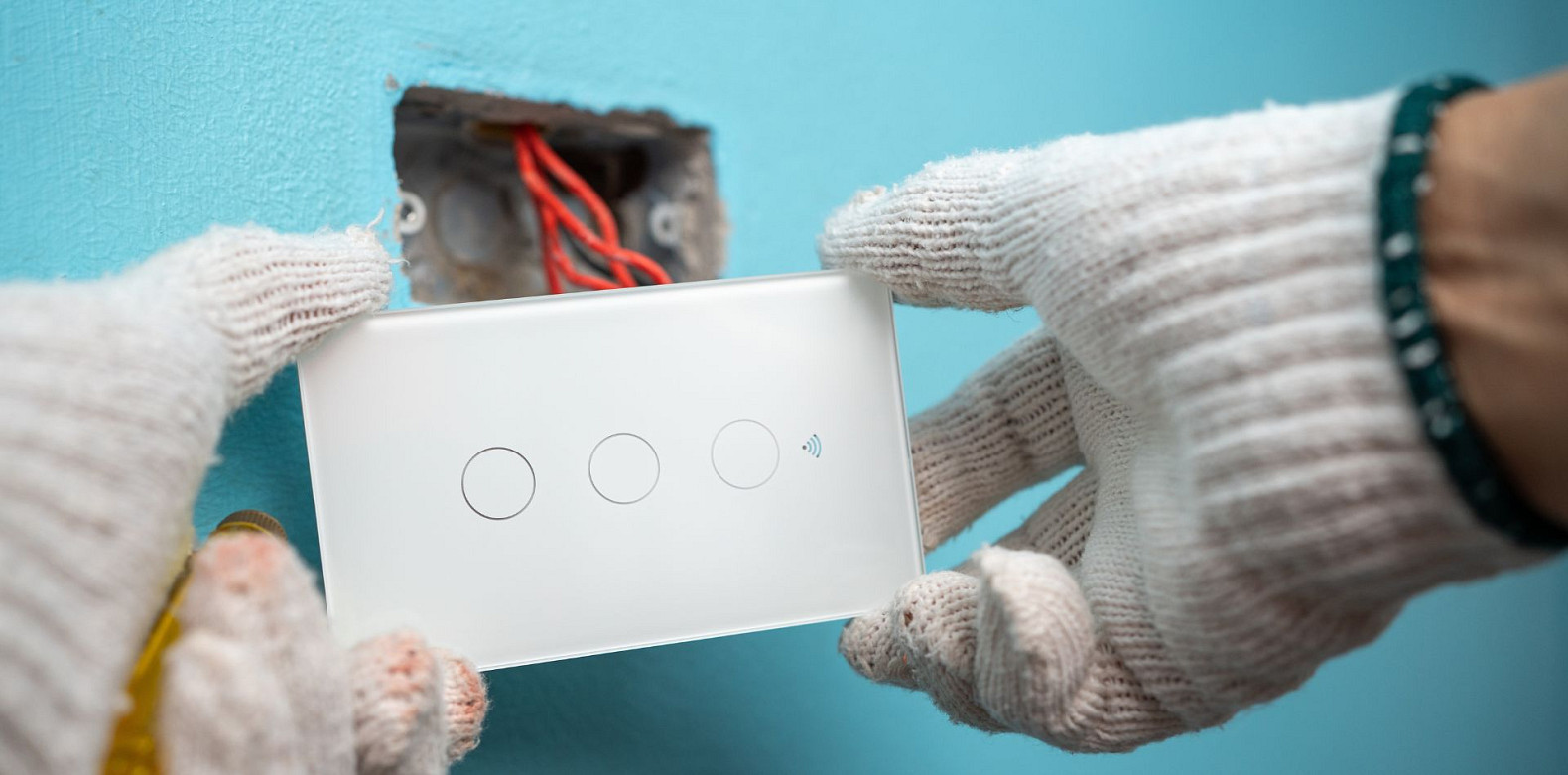
While clients may think about the ‘bigger picture’ of security or ambient lighting, none of this would be possible without smart home switches. In this guide, we’ll look at the best smart home dimmers and switches, thinking about performance, compatibility and reliability.
Find out more about the best smart home switches for your customers, and how to instil the value of a professional solution.
Smart homes go beyond the installation – and user experience is essential in a modern lighting system. A professional integrator will choose the best products for the client, assuring:
Integrators need to consider factors like protocols, load type and overall system compatibility. Without this, customers may experience flickering lights or limited options for automation.
This is why switches and dimmers need to be part of a home’s infrastructure, acting as control points rather than simple hardware. They can offer smoother dimming and connectivity between devices for a fully integrated home.
The best smart home switches and dimmers are more than accessories. They offer clients complete control, and today we have more choice than ever.
Depending on clients’ needs, integrators can choose from:
These offer simple on/off controls, either through automation or a mobile app.
The key feature for these is scene control with adjustable brightness.
Multi-button controls can trigger several scenes or systems at once.
More advanced, these use wireless mesh-based controls.
These wired systems offer panellised lighting control.
It’s important to always come back to the clients’ needs when quoting for a smart switch or dimmer. For those who need more flexibility, wireless is best – but these can be unpredictable. Meanwhile, if they’re interested in scalability, wired systems offer a reliable solution.
A DIY switch may be able to fulfil very basic needs, but it is the professional installation that makes the difference. In particular, professional projects can accommodate scene-based lighting. This might involve zoning areas of the house, or changing brightness and colours depending on the mood.
Likewise, they offer whole-home automation. Simple instructions can be given to IoT devices for a consistent performance across all rooms. DIY switches, by comparison, are control-only.
|
Feature |
DIY smart switches |
Professional installation |
|---|---|---|
|
Automation |
Basic |
Advanced scene control |
|
Installation |
Simple |
Needs project planning |
|
Integration |
Limited compatibility |
Full system integration |
|
Reliability |
Unpredictable |
High |
|
Scalability |
Limited |
Designed to scale |
|
User experience |
App-only |
Consistent across all systems |

During the consultation stage, integrators should be sure to outline all of the following factors:
The load type is key here – thinking about resistive, capacitive or inductive loads to determine how lights react to switches and dimmers. Integrators should also check LED compatibility for a sustainable, reliable installation.
The chosen product should have a smooth dimming effect, helping to prevent flickering.
Different clients will have different needs. While Zigbee is designed for IoT data networks, others may prefer wired systems or proprietary platforms. These will impact things like compatibility, reliability, scalability and battery life.
If your client chooses a wired system, there is the option of neutral or non-neutral wiring. The former uses a return path to complete the circuit, while the latter is earthed.
Installers will need to check the smart home devices already in place. All switches and dimmers should integrate with existing ecosystems.
Smart home switches are part of the wider home aesthetic, so integrators need to think about button layouts and overall usability. Likewise, the user interface may be single-function or designed for scene control.
Finally, in addition to testing compatibility, it’s important not to mix systems. Low-quality components should not be part of a professional setup, so it’s best to discuss any existing hardware before beginning.
For the strongest installation, integrators should avoid these five mistakes:
For consistent, flicker-free performance across the home, a professional system wins every time. Clients need to know that they’re investing in an integrated lighting experience rather than a simple accessory.
Said experience includes better automation and customised scene control. There’s also the opportunity to upsell tech support, reaffirming the value of centralised management and reduced downtime. With a professional solution, everything is built with the client in mind.
Once considered nothing more than hardware, switches and dimmers are now the central control point of any well-designed smart home. With a professional installation, integrators can guarantee longevity and scalability, giving them true competitive advantage.
To learn more about how to communicate your value, join CEDIA today.
Join CEDIA
Tue, Oct 6, 2026
How Light, Sound, and Scent Shape the Experience of Home
Fri, Oct 2, 2026
How CEDIA Certification Has Changed My Business
Thu, Oct 1, 2026
Designing a Home Around Sound - Sponsored
Wed, Sep 30, 2026
What You Need to Know About 529 Savings Plans