Nov 9, 2023 • Last Updated: Sep 30, 2026 • News

CEDIA Certification helps smart home professionals demonstrate verified knowledge, build confidence and develop their careers. Yet misconceptions still prevent technicians, employers and business owners from taking the next step.
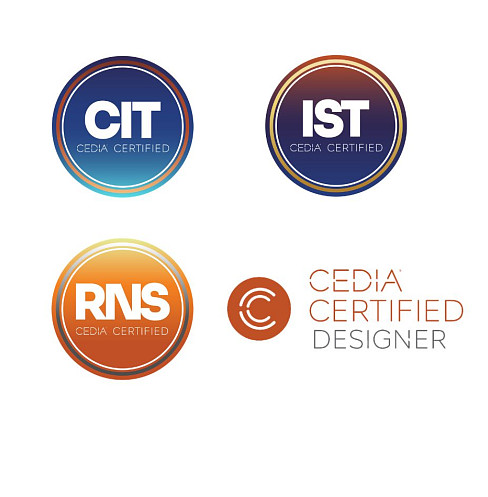
CEDIA Certification offers four individual certifications: Cabling and Infrastructure Technician (CIT), Integrated Systems Technician (IST), Residential Networking Specialist (RNS) and Designer Specialist (ESC-D). Each covers a defined area of knowledge and skill within the smart home industry.
In this guide, we dispel four common myths about CEDIA Certification and explain what certification can mean for your career, team and business.
The reality: Certification helps you demonstrate professional competence.
Clients, employers, architects, builders and allied trades need confidence that the people they work with understand smart home technology and follow recognised best practices. CEDIA Certification gives individuals a clear way to demonstrate their knowledge and commitment to professionalism.
For businesses, having certified team members can strengthen credibility when competing for projects, working alongside other trades or developing relationships with architects, designers and builders.
Certification is held by the individual, not the company. That means it supports the technician’s career while adding valuable capability and reassurance to their employer.
The reality: Experience and certification work best together.
Time in the industry matters, but it does not automatically prove that knowledge is current, broad or aligned with established best practices. Smart home technology changes quickly, from networking and infrastructure to installation methods, system design and client expectations.
CEDIA Certification helps professionals validate their expertise through a proctored exam and continued professional development. It also gives experienced technicians a structured way to identify gaps, refresh their knowledge and demonstrate what they know.
The right certification depends on the role:
CIT is suited to early-career technicians working with basic infrastructure wiring.
IST is for technicians who work independently through pre-wire, trim-out, troubleshooting and system verification.
RNS is for experienced professionals working with residential network design, configuration, maintenance and troubleshooting.
ESC-D is for professionals involved in system design, schematics, budgets, product selection and project delivery.
The reality: Developing capability can reduce risk and improve efficiency on site.
Training and certification require time, but the cost of unclear responsibilities, avoidable errors and rework can be far greater. A well-trained team is better equipped to make sound decisions, recognise when escalation is needed and complete work to a consistent standard.
For employers, certification can also support clearer career pathways. It helps technicians understand the knowledge expected at each stage of their development and gives managers a practical framework for investing in team capability.
CEDIA provides learning resources, in-person training and certification pathways to help professionals work towards the right credential for their role and experience level.
The reality: CEDIA Certification is designed for smart home professionals worldwide.
CEDIA Certification is relevant to smart home professionals across international markets. The certification pathways are built around the core knowledge and skills needed to deliver professional residential technology projects, wherever you work.
CIT and IST are accredited by the ANSI National Accreditation Board (ANAB) to the ISO/IEC 17024 international standard for personnel certification bodies. This gives technicians, employers and industry partners confidence that the certifications are based on recognised international principles.
Whether you work in the UK, Europe, North America, Australia or another established CEDIA market, certification can help you demonstrate professional knowledge, build credibility and support your career development.
CEDIA Certification can help smart home professionals:
CEDIA Certification is a set of professional credentials for smart home professionals. Each certification recognizes knowledge and skills in a defined area of residential technology, from infrastructure cabling and installation to networking and system design.
Yes. CEDIA Certification helps professionals demonstrate their knowledge, strengthen credibility with employers, clients and industry partners, and support their ongoing career development. For businesses, certified employees can help demonstrate a commitment to quality, professional standards and continuous learning.
The Cabling and Infrastructure Technician (CIT) certification is designed for early-career technicians working with basic infrastructure wiring for limited-energy technology systems. The Integrated Systems Technician (IST) certification is for technicians who can work independently through the pre-wire and trim-out stages of a project, troubleshoot common errors and verify system functionality.
CIT is for early-career technicians focused on cabling and infrastructure. IST is for technicians working independently on smart home installation projects. RNS is for experienced professionals specialising in residential network design, configuration and troubleshooting. ESC-D is for professionals responsible for system design, documentation, budgets and project delivery.
Yes. CEDIA Certification is designed for smart home professionals across international markets. The CIT and IST certifications are accredited by the ANSI National Accreditation Board (ANAB) to the ISO/IEC 17024 international standard for personnel certification bodies.
To earn a CEDIA Certification, you must pass the relevant proctored exam, commit to CEDIA’s Code of Ethics and maintain your proficiency through ongoing professional development. Preparation resources and training are available to help you choose and work towards the right certification.
CEDIA certifications are valid for three years. To remain certified, individuals must complete the applicable renewal requirements and ongoing professional development.
No. Certification and practical experience complement each other. Experience develops through real projects, while certification gives professionals a structured way to validate knowledge, refresh their skills and demonstrate competence in recognised areas of smart home technology.
Fri, Oct 9, 2026
How CEDIA Certification Can Change Your Business
Tue, Oct 6, 2026
How Light, Sound, and Scent Shape the Experience of Home
Thu, Oct 1, 2026
Designing a Home Around Sound - Sponsored
Wed, Sep 30, 2026
What You Need to Know About 529 Savings Plans