
Oct 5, 2026 • Blog, Smart Devices/Appliances


Conservatories tend to overheat because they are mostly glass. Due to their large windows, they let in more sunlight and therefore heat than a normal room with insulated walls. This problem is exacerbated with glass roofs as these trap even more heat than tiled roofs.
The orientation of a conservatory can also contribute to its poor temperature regulation. South- and west-facing rooms will be the hottest, as they’ll receive the most direct sunlight. When installing a conservatory, you can’t choose where you place it. Their orientation is determined by your house’s existing layout. While gardens that attract all-day sun are often attractive to homeowners, the conservatories that look out on them are the most prone to overheating.
Poor ventilation is another reason why conservatories can get too hot. As most arethey’re built to lock in heat, there’s usually no cooling breeze. Many also have fixed glass panels, which means you can’t open windows during evenings to lower the room’s temperature. However, some modern designs do have openable windows. With smart window control, you can automate window opening to allow better ventilation.
Although conservatories face unique challenges, heating and cooling issues often affect entire houses. A Smart Temperature Control system can help homeowners live more comfortably in all rooms, including conservatories.
Tinted glass contains colourants that absorb incoming solar heat within the glass, preventing the heat from entering the room. The sun makes the glass hot, but it doesn’t heat the room up in the same way as non-tinted windows do.
Some of the benefits of tinted glass include:
However, there are also downsides to tinted glass, such as:
There are also some smart glass or smart film options that you can control to tint or become opaque. With smart switchable glass, the alignment of particles inside its film or coating shifts in response to changing electrical, heat, or light signals. This makes it possible to protect against glare with more flexibility. With smart tinted glass, the level of tint will vary to suit different situations.
Solar control glass is another fixed solution to deal with overheating. However, the science is different from tinted windows. Solar control glass works by reflecting heat and transmitting light. Compared to tinted glass, it rejects a higher amount of solar heat and doesn’t become hot itself. As it’s not tinted, it also looks more like a normal window and doesn’t affect colour perception looking inside or outside the room.
Typically, solar control glass is more expensive than tinted glass as it has a more complex manufacturing process.
You can still prevent a conservatory from overheating even if it has standard glass windows. Motorised blinds that open and close automatically can regulate the amount of light and heat let into the conservatory.
You can programme smart blinds to respond to:
By creating sequences based on triggers, you can use automated blinds for heat control to stop your conservatory from overheating.
Smart blinds can also fit into a wider home automation system, where shading, heating, and lighting are considered within smart home routines rather than treated as standalone components. If the conservatory becomes too hot, the smart blinds can come down, air conditioning can kick in, and lights can turn on to mimic the blocked-out daylight. By integrating smart blinds into a central smart home dashboard, you can adjust them alongside every other component.
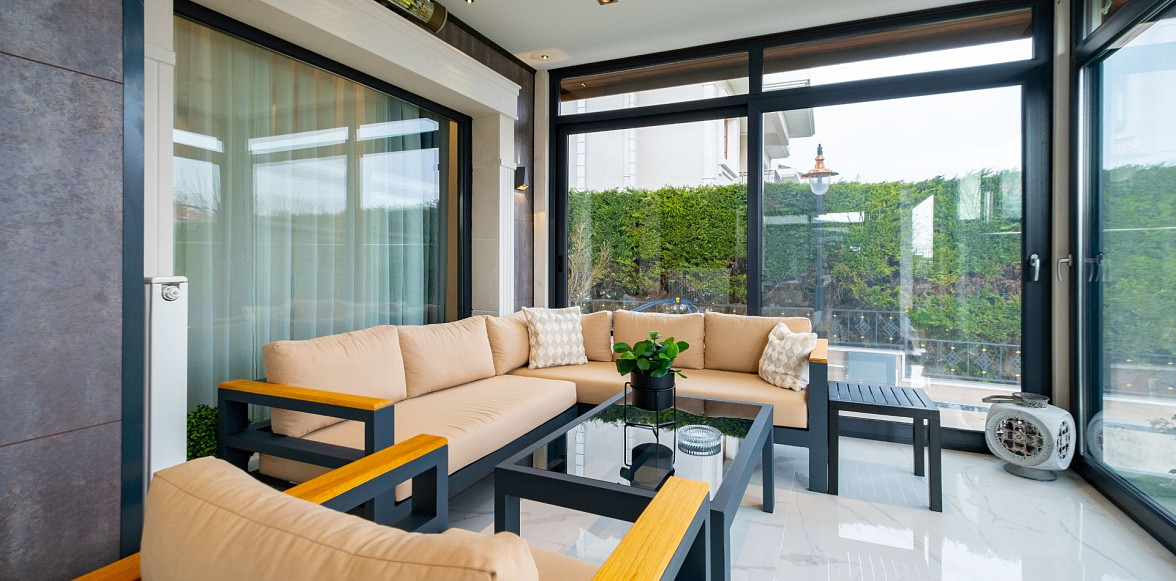
Specific types of windows and smart blinds can stop a conservatory from being too hot. However, they prevent overheating in different ways. One approach may suit some people more than the other.
|
Factor |
Tinted / Solar Control Glass |
Smart Blinds |
|---|---|---|
|
Heat control |
Passive, fixed level year-round |
Active, changes through the day |
|
Adjustability |
None once installed |
Scheduled, sensor-based, or manual |
|
Retrofit ease |
For the most sophisticated options, it usually means replacing window panes. However, you can buy DIY tinted film for some windows and roofs. |
You can often install these without making any major changes to your conservatory. |
|
Smart home integration |
None |
Yes, can integrate with other systems like heating and lighting |
|
Ongoing effort |
None, works automatically |
Minimal once set up, but relies on power and Wi-Fi |
While tinted and solar control glass can be simpler solutions with less maintenance or need for connectivity, some people find the lack of flexibility frustrating. With smart blinds, you can block out the sun on a hot afternoon but let it in at other times. With tinted glass, you’ll always limit how much daylight and heat is coming into your conservatory regardless of the weather.
When weighing up the two options, consider how they’d function within the wider ecosystem of your home and your overall smart heating and cooling costs.
Many homeowners use specialist glass alongside smart blinds to control their conservatory’s temperature. To maximise the benefits of both, a CEDIA-certified installer might suggest pairing a moderate solar control glazing upgrade with automated blinds. With this combination, you’d use the glass for baseline everyday temperature protection and the motorised shades for the extremes. Just like smart home and home automation solutions, the two technologies can complement each other rather than compete.
If you’re unsure if smart home technology is worth the investment, weigh up the costs against the benefits. In the case of a conservatory, think about whether the space will be too hot without the upgrades. If you save money on your conservatory by opting for standard glass and not installing smart blinds, it might cost you less but you might not be able to use the room for as much of the year. It’s important to evaluate whether the extra investment is worth it if it enables you to enjoy the space more often.
How much it will cost to install tinted or solar control windows and motorised blinds will vary depending on your conservatory size and chosen blind type. Speaking to professionals for quotes is the best way to get accurate figures.
Temperature-controlling glass and smart blinds solve different aspects of the same problem. Both limit the light in your conservatory, but glass will offer less adjustability than blinds. To maximise temperature control, you can use both at the same time. You can even combine them with other smart systems, including HVAC, to ensure your conservatory stays as comfortable as possible, even in the height of summer.
If you’re interested in embracing smart tech to solve your conservatory overheating problems, consider hiring a CEDIA-certified Smart Home Professional. They can assess your space and recommend the right mix of technologies.
Tue, Oct 13, 2026
Renovations: Smart Home Decisions to Make Early
Sun, Oct 11, 2026
Smart home systems that actually add value when you sell your house
Mon, Oct 5, 2026
What to Ask a Smart Home Installer Before They Start

Wed, Sep 30, 2026
What does a CEDIA-certified Smart Home Professional actually do?