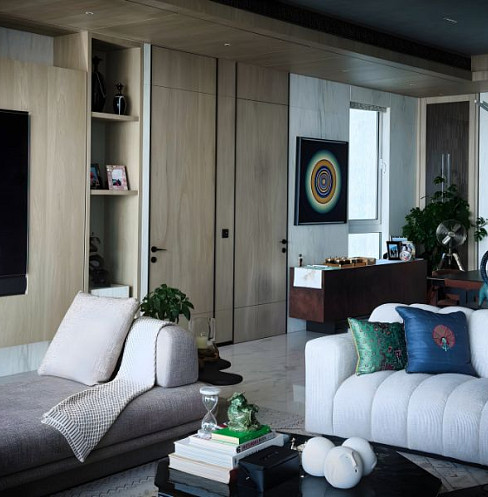
From the first meeting, the family’s message to Beyond Alliance was clear: we trust you, so do what you feel is right. They wanted something classy but more about substance than badge, and nothing that would be a burden to live with. That became the team’s guiding rule of “top of the line, but never complicated to live with”.
The home is zoned for the family, with the two sons’ bedrooms at one end and the parents and the couple at the other. Beyond Alliance matched the technology to each person. The younger generation get richer automation and audio, and the parents get simple keypads that work like ordinary switches. All the wiring and programming for full automation is already there, so when the parents are ready it’s a software switch-on rather than a site visit.
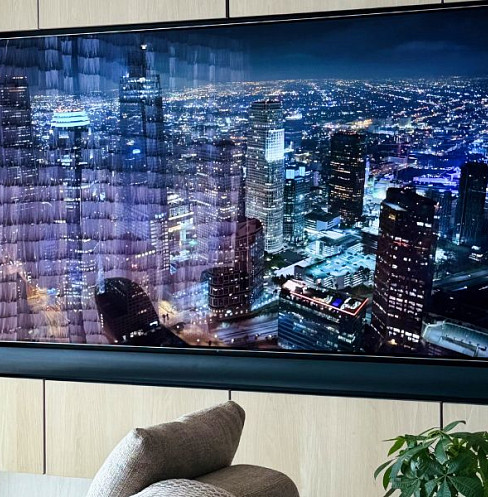
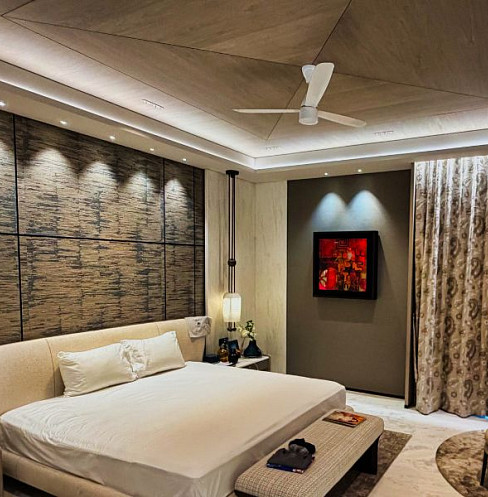
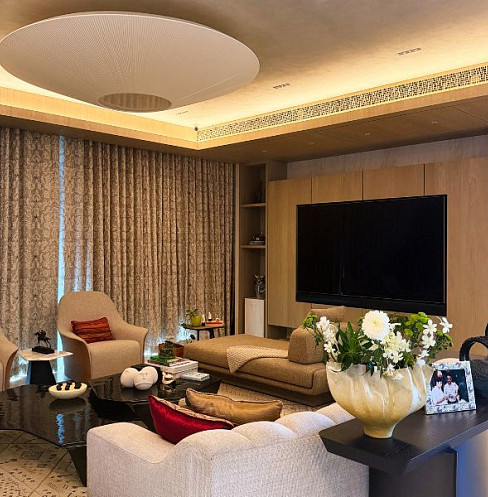
The living room is the family’s entertaining hub, with a 100-inch screen and invisible ceiling speakers that keep the ceiling clean, a must for the elder son, who is an audiophile. Music plays through seven zones, including bedrooms, bathrooms, the kitchen and the balcony, and the father’s bedroom has a simple soundbar. A fingerprint sensor on the master bedroom door sets the room for the person who scans it, with the AC on during the day or the TV, curtains and lights ready for the evening.

Four Stealth invisible in-ceiling speakers were specified instead of conventional grilled units, paired with a custom TrueAudio soundbar sized precisely to the 100-inch TV and Paradigm subwoofers, resolving a clean ceiling and reference-level sound simultaneously.
Denser scene-based control and richer audio coverage were built into the sons' wing, while the parents' keypads were programmed to behave like traditional single-button switches, with the full automation layer already wired in and ready to enable via software whenever they're ready for it.
An ekey fingerprint sensor was programmed to recognize which finger scanned and what time of day it was, triggering either a day-use scene (AC and fan only) or an evening AV scene (TV, curtains, dimmed lighting) from the same single piece of access hardware.
A 100-inch flat panel was specified instead, delivering the presence they wanted without the ceiling penetration or drop-down screen a projector setup would have required.