By CEDIA - Jun 29, 2026 • Blog, Guides and FAQs
Managing a second property can be challenging, particularly when it’s a holiday home located far away from your main residence. You might have concerns about how to keep it safe when it’s empty. Perhaps you rent it out for short-term lets and struggle to oversee it remotely. Thankfully, smart technology can make it easier to take care of any home you don’t live in.
You can rely on connected technology and automation to help maintain your smart holiday home. With simplified remote monitoring, you can keep an eye on your property from afar. You can also automate guest access, so that you can securely let family and friends or paying holidaymakers in without being there in person.
In this guide, we’ll explore how professionally designed home automation for rental properties can help homeowners keep their properties secure, energy-efficient, and ready for guests.
A smart holiday home is a second property that uses smart technology. It might be a property that its owners only use for several weeks a year, or it could be utilised as a business with paying guests renting it for short-term stays.
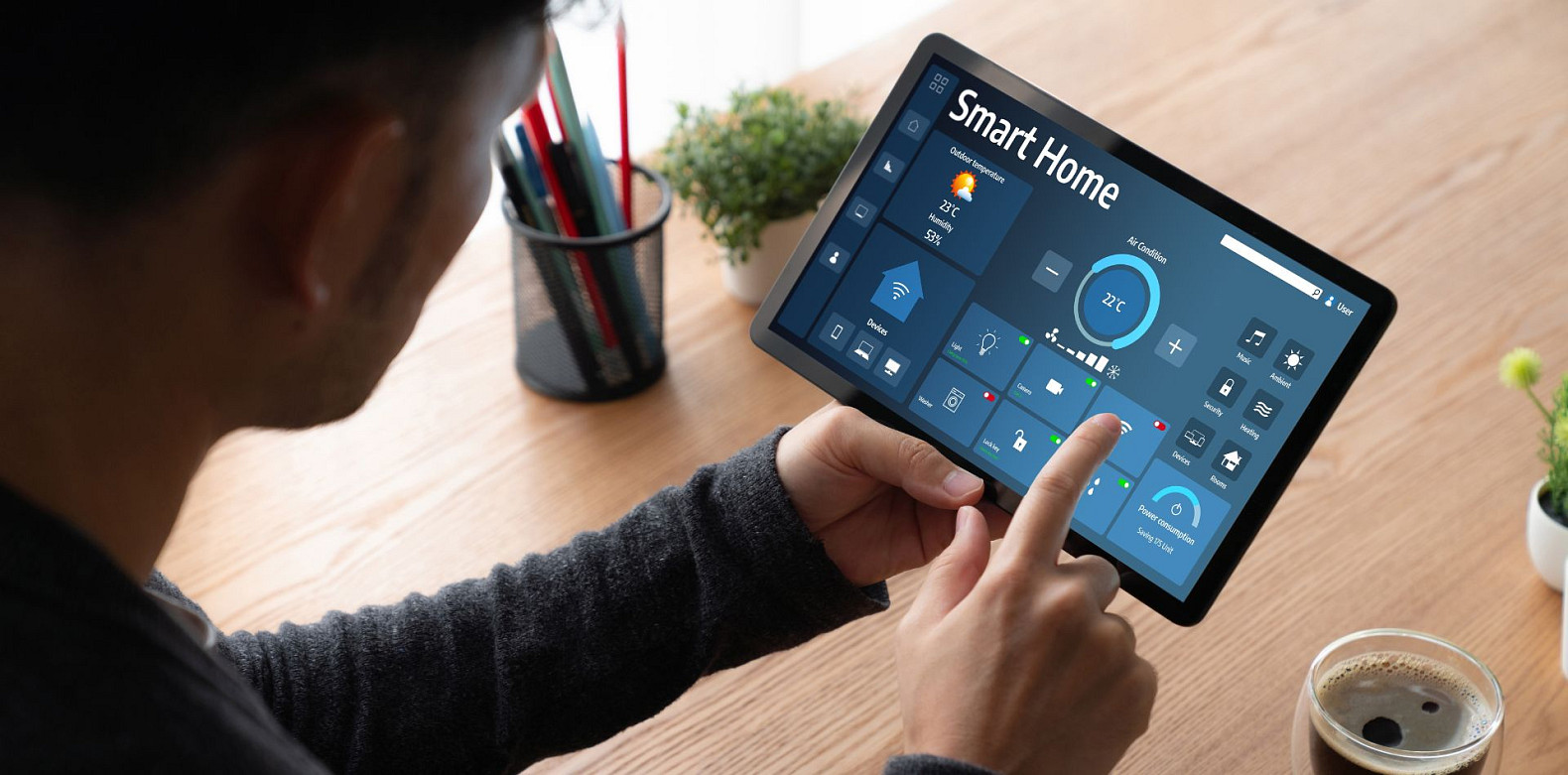
Some of the integrated technologies you might find in a smart holiday home include smart locks, advanced climate control, smart lighting, and sophisticated security cameras. By connecting these elements to a joined up control system, homeowners can adjust and monitor them from anywhere. So, if a houseguest leaves devices on when they vacate the property, the homeowner can turn them off to save energy. Owners can also check if their property is secure through surveillance.
With the right automation routines put in place, homeowners don’t even need to act to keep their holiday home functioning as planned. For example, a smart heating system can keep it at a comfortable temperature at all times with no manual input.
Remote access and monitoring provide peace of mind when the property is unoccupied. Homeowners don’t need to worry if a houseguest has left a door or gate unlocked, as they can lock these via a central control. With a smart security system, property owners can also receive alerts from doorbells and external cameras so that they’ll know if there’s an issue they need to investigate.
In addition, energy management can help reduce running costs. Sensors can detect occupancy and automatically turn lights on and off. This helps to save energy both when the property is occupied and empty. It means lights turn off when people leave a room, and it prevents lighting from being accidentally left on between holidays.
If the property is let out, convenient tech can be a unique selling point that helps a vacation home stand out from others on the market. Investing in smart tech can make the holiday home more profitable in the long term.
Home automation can simplify the remote management of rental properties.
Automated lighting and heating schedules can keep energy bills as low as possible while keeping the house comfortable.
Security monitoring with built-in alerts can help homeowners relax while they rent their property, as they have the reassurance that they’ll be informed of potential intruders.
It’s also possible to integrate home automation with booking schedules. This could mean that security alerts become more sensitive at times when the property should be empty. This integration can also reduce energy waste, turning off unnecessary devices when there is no occupancy.
Guests can benefit from smart technology from the moment they arrive at a smart vacation rental home. With smart locks, they can use keyless entry and temporary guest codes to access the property. This setup enables them to check in at any time without having to wait for a host.
Automated scenes can also greet visitors with appropriate lighting and climate adjustments. When the holidaymakers enter the property, lights can turn on, and temperatures can automatically adjust to provide an ideal welcome. If appropriate, entertainment can be included in scenes. For example, a party property might play music via smart speakers if guests say a simple phrase.
To offer the best experiences, homeowners should consider smart technology with intuitive controls. As holiday guests won’t have long to get to know how to use a system, it should be easy for them to activate sequences with voice control or simple interfaces. A Smart Home Professional can help create a system that people can pick up quickly with minimal instructions.
Smart cameras, door sensors, and automated alerts can protect a property. Remote monitoring is particularly important when a property is vacant for longer periods of time.
Although faraway homeowners may not be able to attend to their property if an incident occurs, they can still react to notifications. Some alert systems will even automatically inform emergency services to keep the property and its guests safe.
Smart thermostats and climate automation can reduce energy waste in holiday homes. Automated heating, ventilation, and air conditioning (HVAC) systems can keep properties at a safe temperature at all times without using unnecessary energy. If it’s warm, the heating will not turn on. With a sophisticated system, hot weather won’t automatically trigger air conditioning if the property is empty. Instead, a cooling system can start up in the hours before a guest is due to arrive.
Automated lighting schedules can also reduce energy when a property is empty. Lights can turn off when all rooms are unoccupied. They can also be programmed to come on at specific times to give the illusion of occupation. Turning lights on for a few hours can ward off intruders while using less energy than permanently leaving lights on.
By being able to monitor utilities remotely, homeowners can lower the operational costs of their rental home by turning off unnecessary devices and systems via their central control interface. Access to usage data also helps homeowners get a clearer picture of how holiday bookings affect their bills. Getting a view on guest energy use can inform pricing for future rentals.
Integrating multiple systems in a vacation rental home automation setup is complex. However, the end result needs to be easy enough for renting holidaymakers and visiting friends and family to use. Thankfully, professional installers can create user-friendly smart homes that incorporate many elements.
CEDIA-certified professionals can design smart home systems that are powerful for owners but simple for guests. While some standalone DIY devices are available off the shelf, like smart lockboxes for keys, it’s necessary to use a professional installer to create an integrated system. With professional installation and thoughtful design, smart home technology can help protect homeowners’ investments, simplify property management, and improve people’s holidays.
Mon, Oct 5, 2026
What to Ask a Smart Home Installer Before They Start
Wed, Sep 30, 2026
What does a CEDIA-certified Smart Home Professional actually do?
Fri, Jul 10, 2026
Smart Home Installation for First-Time Homebuyers: What You Need to Know
Wed, Jul 8, 2026
Smart Home Nurseries: How Smart Technology Can Help With Parenthood