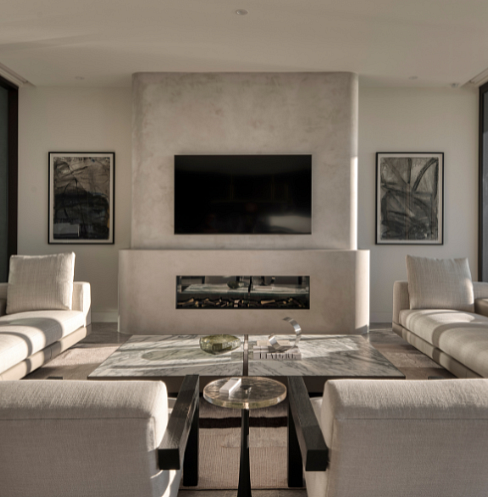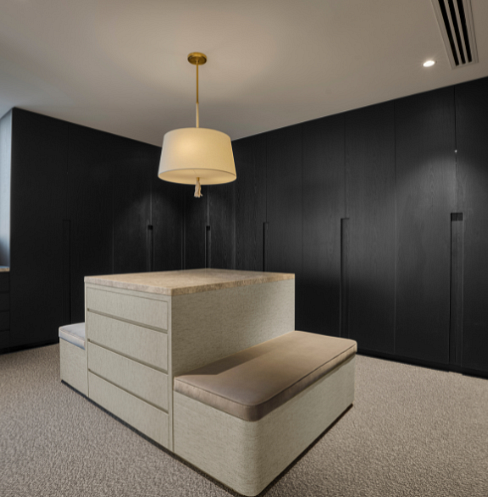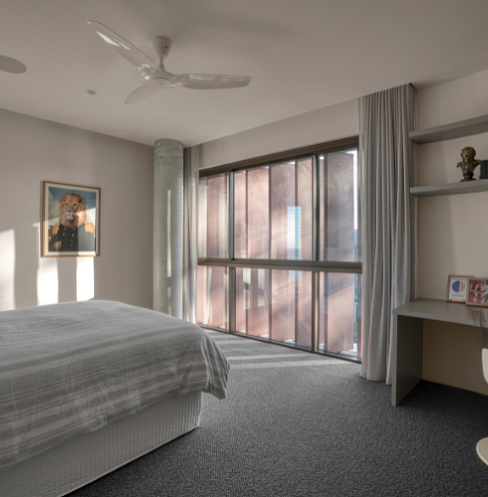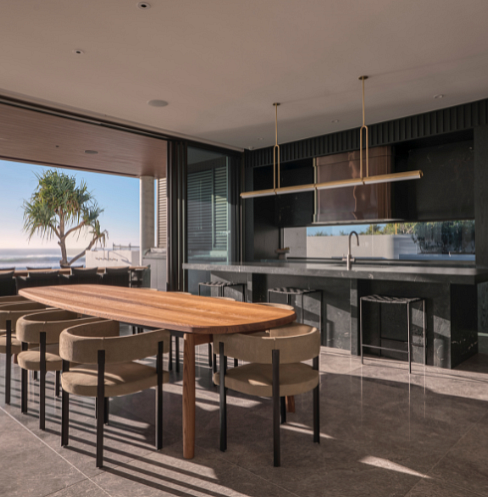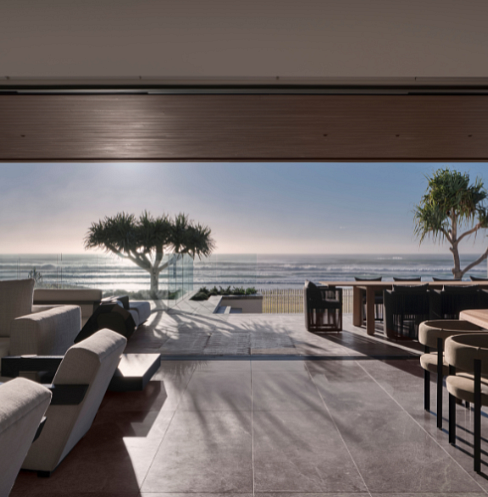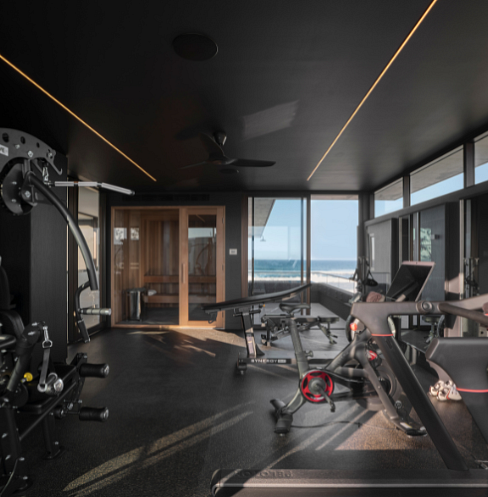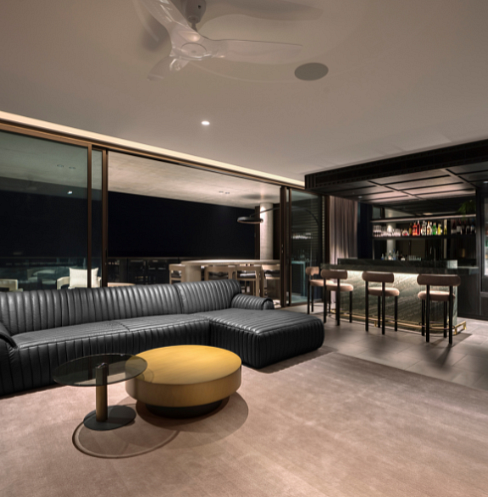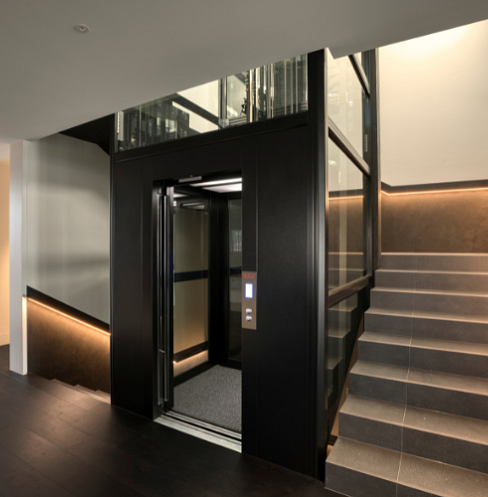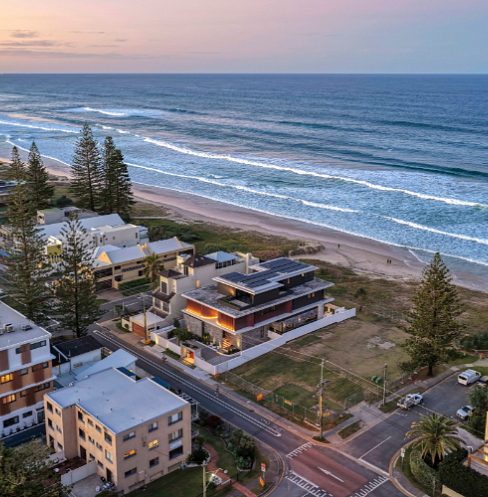
The client’s vision was minimalist and intuitive. The home’s concrete, glass and timber architecture, sitting right by the sea, was meant to be the star, so Bridger Automation kept the technology out of sight. There are no walls crowded with switches, and the equipment lives in a ventilated services room instead of in the living spaces. Everything is controlled through Control4, from touchscreens, engraved keypads or a phone.
Day to day, the house simply responds. Lighting and climate adjust to who is in a room and the time of day, and the blinds and curtains follow “Morning”, “Evening” and “Goodnight” scenes. Music plays through 14 zones across all four levels. “Party Mode” puts the whole house on one playlist at the touch of a button, while the children can listen to Spotify in the playroom and the parents stream a podcast in the master suite. The pool and spa are part of the system too, so the spa can be heated on the way home.
The coastal setting posed challenges. Salt air is hard on electronics, so outdoor speakers and sensors are marine-grade and weather-sealed. The concrete and steel structure blocks Wi-Fi, so Bridger designed a commercial-grade network with hard-wired access points, so devices stay connected as you move between floors.




Se instaló una red Araknis de nivel comercial con múltiples puntos de acceso cableados, situados estratégicamente y verificados mediante un análisis previo del mapa de cobertura, lo que permite una itinerancia fluida por los cuatro niveles sin pérdidas de señal.
Para los sensores y altavoces externos se utilizaron carcasas para exteriores con clasificación IP y recubrimientos de grado marino, mientras que los altavoces de exterior para jardines, también de grado marino, se seleccionaron específicamente para resistir las condiciones corrosivas del entorno costero.
Los extensores de audio digital extraían el audio directamente de los televisores inteligentes y lo enviaban de vuelta a la matriz central, lo que permitía mantener el sonido perfectamente sincronizado en zonas adyacentes, como la cocina y la terraza.
Se utilizó el ecualizador de 16 bandas integrado en la matriz digital Triad 16x16 para ajustar digitalmente cada zona, atenuando las frecuencias agudas estridentes que, de otro modo, rebotarían en las paredes de cristal.