
By CEDIA - Wed, Feb 25, 2026 - Blog
In today’s world, many of us feel surrounded by technology. AI, constant notifications, and an increasing number of device features can become overwhelming. However, the smartest homes use technology in a way that doesn’t swamp their owners. With calm tech and ambient computing, homeowners can enjoy tech without realising it’s there.
We’ll explain the benefits of smart homes that adapt around their occupants and the technology that makes it possible.
Calm technology refers to devices and systems that blend into the background. Calm tech can make adjustments automatically and unobtrusively. For example, a smart solution can change lighting before the homeowner has thought about it. Automatic actions like this can reduce the feeling of tech overwhelm.
So, how is calm technology made possible? Ambient computing is the underlying layer. That’s the intelligence that helps smart homes interpret data and respond. For a smart home to make adjustments without active interactions, it needs to pick up on triggers through sensors.
A calm smart home can use ambient sensing to pick up various signals, including:
Ambient sensing technology adapts before the homeowner acts. Sometimes, that's before the homeowner has even realised they want to act. Its proactivity keeps a home comfortable and minimises reminders of technology.
For ambient sensing and calm technology to work well, smart home integrators must design solutions that put people first.
With human-centric design, technology should fit around the person – not the other way around. People-first tech should improve everyone’s comfort and wellbeing. Complex devices can hinder these. That's why unobtrusive, automated calm technology is ideal for human-centric design.
The most effectively programmed systems will respond to human behaviour, such as entering a room. It will then use this information to make tweaks. If somebody is sitting at a work desk for many hours, they may appreciate cooler, brighter lights to aid concentration.
While automation removes most direct interactions with tech, homeowners should still feel in control. Tech should, therefore, be a supportive layer that’s easy to adjust. To keep technology meeting everyone’s needs, there needs to be a simple way to make manual interventions. Interfaces (such as apps and home controls) should be intuitive. Having everything together in one system can help ease the burden of technology. It’s simpler to control one interface than learn how to work multiple devices.
Professional smart home integrators know how to configure systems that embrace human-centric design. Features like concealed sensors, unified controls, and voice-activation help integrators create unobtrusive smart homes. By combining practicalities (like voice commands) with aesthetics (sensors that blend into existing interiors), calm smart homes become high-taste and high-tech.
There are many ways you can embrace calm technology in your smart home, including:
Effective calm technology will improve day-to-day experiences across a smart home.
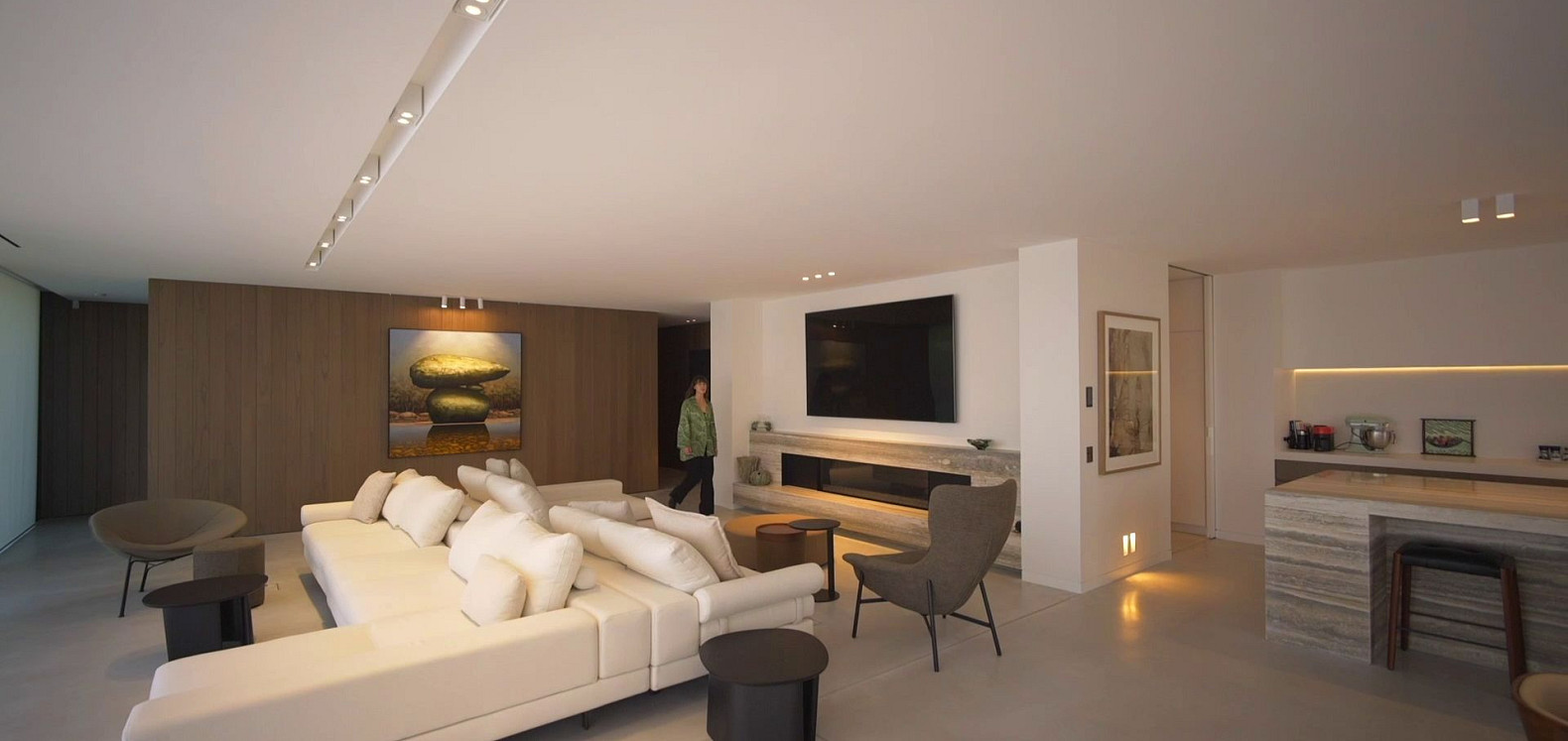
Assisted by ambient computing, calm technology can make life at home more pleasant for several reasons.
With some smart homes, the number of apps, alerts, and choices can become overwhelming. Thanks to calm tech, you can automate your system to make appropriate adaptations for you. Getting automation right will reduce the mental load of managing a smart home.
Calmer lighting, sound, and automation help create harmonious daily routines. Unobstrusive tech can take care of things, which can reduce homeowners’ stress levels. A comfortable environment can also improve sleep.
Hidden sensors, flush-mounted speakers, and integrated lighting help your home stay uncluttered.
Human-centric design can also make smart homes more inclusive. Intuitive controls tend to suit children, older adults, and people with accessibility needs.
Responsive systems can also make smart homes more welcoming to guests. Ambient sensors can pick up on a guest’s presence and their needs. There's no need for them to understand the controls.
With calm technology, a smart home should feel like a welcoming sanctuary for everyone.
If you want to use ambient computing and calm technology in your home, it’s worth starting your journey by identifying pain points. Are there any rooms that feel too bright, noisy, or reliant on manual controls? By fixing areas that annoy you, you could soon enjoy a calmer home.
While you’ll ideally want your smart technology to work together via one joined-up system, you don’t necessarily need to overhaul everything in one go. A professional integrator can advise you on how to make changes that complement existing systems. You may want to first focus on where automation will have the biggest impact, such as entryways, bedrooms, or living spaces.
To use calm technology, you'll need expert help to get the right sensor placement, interface design, and automations. CEDIA-certified professionals specialise in creative, intuitive environments that can meet calm needs. Visit our directory to find a Smart Home Professional.
Wed, Mar 25, 2026
Integrating Aromatherapy & Hydrotherapy In The Home
Wed, Mar 11, 2026
Smart Home Gesture Control for Accessibility
Wed, Mar 11, 2026
Bringing Life into Your Home with Smart Indoor Gardens
Wed, Mar 11, 2026
Best Smart Lighting For SAD
Tue, Mar 10, 2026
The Future of Cooking With Robotics and AI in the Kitchen
Wed, Feb 25, 2026
Smart Homes That Don’t Shout: Calm Tech & Ambient Design